

Key Highlights
- Proper post-implant care promotes the healing and stability of your implants.
- Excellent oral hygiene helps prevent complications and supports implant longevity.
- Sticking to a soft food diet during recovery is essential for avoiding strain on your implants.
- Follow your dentist’s aftercare instructions for a smoother and more effective recovery.
- Regular dental check-ups are crucial for monitoring the health of your implants.
- Avoid smoking and alcohol during the recovery process to speed up healing.
- Swelling and discomfort are normal, but proper care can significantly reduce them.
- Dentist Tree of the Heights provides personalized post-implant care to ensure a smooth and successful recovery.
Are you feeling uncertain about the steps to take after getting dental implants? It’s normal to have questions about how to care for your new teeth and ensure a smooth recovery. Without proper post-dental implant care, there may be a risk of complications that could affect the long-term success of the procedure.
Luckily, by following a few key guidelines, you can speed up your recovery, prevent infections, and enjoy the full benefits of your dental implants.
This guide will walk you through everything you need to know about post-dental implant care. Whether you’re in the early stages of recovery or looking for long-term maintenance tips, we’ve got you covered every step of the way.
What Are Dental Implants and How Do They Work?
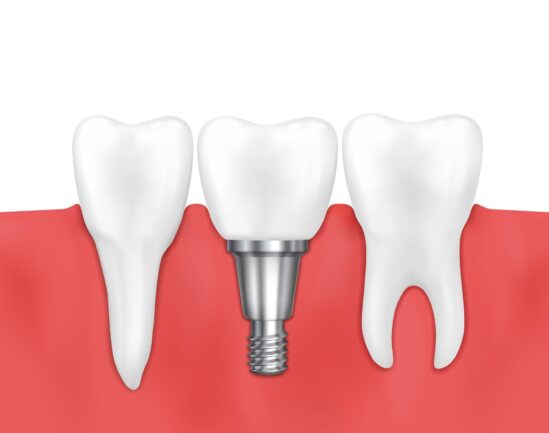
Dental implants are advanced tooth replacement solutions designed to mimic your natural teeth in both look and function. The core of the implant is a small titanium post that is surgically placed into your jawbone. This post acts just like a natural tooth root, providing a strong and stable foundation. Once the implant placement is complete, a custom-made crown is attached to the top, giving you a seamless and natural-looking tooth.
The magic behind the stability of dental implants is a process called osseointegration. This is where your jawbone naturally fuses with the titanium post over a period of several weeks to months. This fusion creates an incredibly durable base, allowing the implant to function just like your original teeth. Whether you need to replace a single tooth or support a full bridge, this technology offers a reliable and long-lasting solution.
There are three main types of dental implants:
- Endosteal implants, which are placed directly into the jawbone
- Subperiosteal implants, which sit just below the gum line
- Zygomatic implants, used for patients with insufficient jawbone.
Why Is Proper Post-Implant Care Important?
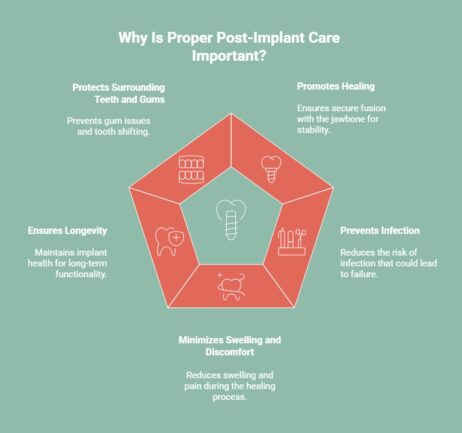
Proper post-implant care plays a pivotal role in the long-term success of your dental implants. After your implant surgery, your body needs time to heal and integrate the implant into the jawbone. Neglecting care during this period can lead to complications, affecting the durability of your implants.
Here are key reasons why post-implant care is crucial:
- Promotes Healing: Following the right care ensures that your implant fuses securely with your jawbone, which is critical for stability and strength.
- Prevents Infection: Proper hygiene and care reduce the risk of infection around the implant, which could lead to implant failure.
- Minimizes Swelling and Discomfort: By adhering to care guidelines, you can reduce swelling, pain, and discomfort during the healing process.
- Ensures Longevity: Consistent dental implant after care helps maintain the health of your implant, allowing it to function like a natural tooth for years to come.
- Protects Surrounding Teeth and Gums: Taking care of your implant area ensures that the surrounding tissue stays healthy, preventing any gum issues or shifting of adjacent teeth.
What Are the First Steps in Caring for Dental Implants After Surgery?
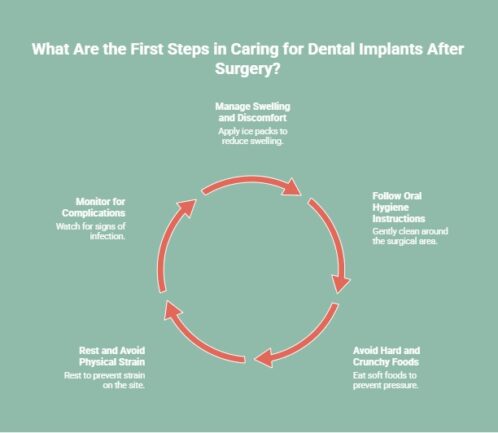
The first few days after dental implant surgery are critical for ensuring a smooth recovery. During this time, following your dentist’s instructions closely is essential for successful healing and effective dental implant care after surgery.
Here are the first steps to follow after surgery:
- Manage Swelling and Discomfort: Apply ice packs to your face for 15-20 minutes every few hours to reduce swelling. Over-the-counter pain medications, as recommended by your dentist, can help manage discomfort during the initial recovery phase.
- Follow Oral Hygiene Instructions: For the first 24 hours, avoid brushing the implant site. Afterwards, gently clean around the surgical area with a soft-bristle toothbrush, being cautious not to disturb the area.
- Avoid Hard and Crunchy Foods: Stick to soft foods that won’t put pressure on the implant during the initial healing phase. Foods like soups, mashed potatoes, and yogurt are great options during the first week.
- Rest and Avoid Physical Strain: Rest is crucial in the first few days after surgery. Avoid vigorous physical activities or heavy lifting to prevent strain on the surgical site.
- Monitor for Complications: Keep an eye out for signs of infection, such as increased swelling, pus, or fever. Contact your dentist immediately if any unusual symptoms occur.
How Can You Manage Swelling and Discomfort Post-Surgery?
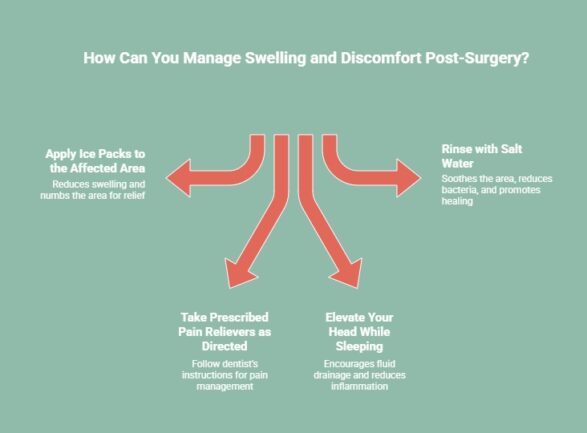
Swelling and discomfort are common following dental implant surgery, but with the right approach, you can manage these symptoms effectively and ensure a smooth recovery.
Here are some helpful tips to ease the discomfort:
- Apply Ice Packs to the Affected Area: Use a cold compress or ice pack on your face near the surgical site for 15-20 minutes at a time during the first 48 hours. This helps reduce swelling and numb the area, providing relief.
- Take Prescribed Pain Relievers as Directed: Follow your dentist’s instructions for pain management. Over-the-counter medications or prescribed painkillers can help reduce discomfort during the initial days of healing.
- Elevate Your Head While Sleeping: To minimize swelling, sleep with your head elevated using extra pillows for the first few nights. This encourages fluid drainage and helps reduce inflammation.
- Rinse with Salt Water: After the first 24 hours, gently rinse your mouth with warm salt water several times a day. This helps soothe the surgical area, reduce bacteria, and promote healing.
What Are the Home Care Instructions for Dental Implant Patients?
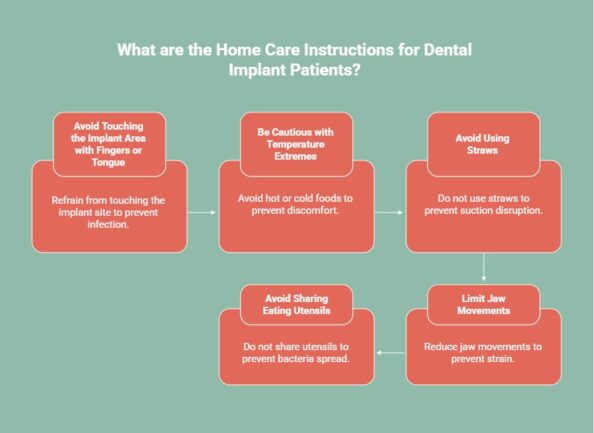
To ensure a smooth recovery and long-term success of your dental implants, following proper home care after dental implant surgery is crucial. Staying consistent with your care routine helps avoid complications and supports the healing process. Here are some key home care instructions to keep in mind:
- Avoid Touching the Implant Area with Fingers or Tongue: Refrain from touching the implant site with your fingers or tongue to reduce the risk of infection and avoid irritating the healing tissue.
- Be Cautious with Temperature Extremes: Avoid consuming very hot or cold foods and beverages, as extreme temperatures can cause discomfort or sensitivity around the implant site during the healing period.
- Avoid Using Straws: Using straws can create suction in the mouth, which may disrupt the healing clot around the implant site. Avoid drinking with straws during the first few days post-surgery.
- Limit Jaw Movements: In the initial days post-surgery, try to limit excessive jaw movements, such as yawning widely or speaking for extended periods, to prevent unnecessary strain on the implant site.
- Avoid Sharing Eating Utensils: For the first few weeks, avoid sharing eating utensils or drinking from the same glass as others to reduce the risk of introducing bacteria into your mouth during the healing process.
How Do You Maintain Proper Oral Hygiene After Dental Implant Surgery?
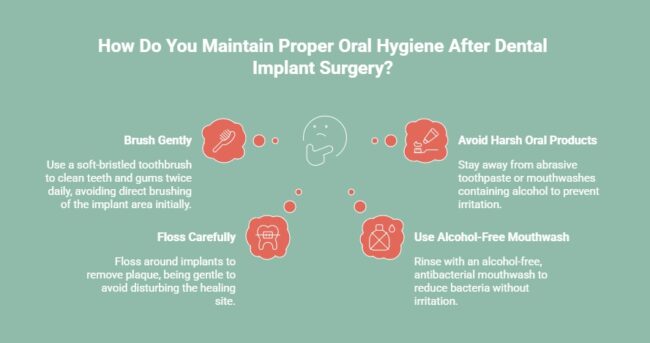
Maintaining proper oral hygiene is essential for the long-term success of your dental implants. The right care prevents complications, such as infections, that can hinder the healing process.
Here are the best practices to follow:
- Brush Gently with a Soft-Bristled Toothbrush: Use a soft-bristled toothbrush to clean your teeth and gums twice daily. Avoid brushing the implant area directly for the first few days and gently clean around it once you’re cleared to do so.
- Floss Carefully Around Implants: Once the healing process progresses, flossing around your dental implant is important to remove plaque. Be gentle to avoid disturbing the healing site while ensuring your gums stay healthy.
- Use Alcohol-Free Mouthwash: Rinse with an alcohol-free, antibacterial mouthwash recommended by your dentist. This helps reduce bacteria around the implant site and keeps the area clean without irritating the gums.
- Avoid Harsh Oral Products: Stay away from abrasive toothpaste or mouthwashes containing alcohol during the recovery period. These can irritate your gums and hinder the healing process.
For a personalized dental implant care plan and to ensure long-term success, book an online consultation today with our team at Dentist Tree of the Heights. We’re here to guide you through every step of your recovery process.
What Foods to Avoid and Include During Dental Implant Recovery?
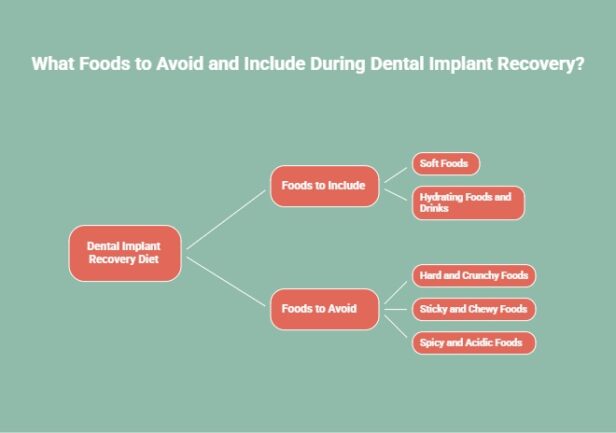
To ensure a smooth recovery, the foods you eat play a crucial role in protecting your implants and supporting the healing process. Here are some foods to include and avoid during your dental implant recovery to help you heal faster.
Here are some foods to include:
- Soft Foods: Choose foods like applesauce, mashed potatoes, yogurt, and smoothies. These are gentle on the implant site and ensure you’re getting the nutrients you need while avoiding pressure on your implants.
- Hydrating Foods and Drinks: Stay hydrated with water, soups, and smoothies. Hydration helps with healing and keeps your mouth moist, preventing dryness and irritation.
Here are some foods you must avoid:
- Hard and Crunchy Foods: Avoid foods like nuts, popcorn, and raw vegetables. These can place unnecessary pressure on your implants and may damage them during the early stages of recovery.
- Sticky and Chewy Foods: Steer clear of foods like caramel, chewy candies, and gum. These can get stuck around the implant site and increase the risk of infection.
- Spicy and Acidic Foods: Avoid spicy foods, citrus fruits, and tomatoes. These can irritate your sensitive gums and delay the healing process.
What Are the Best Practices for Maintaining Dental Implants Long-Term?
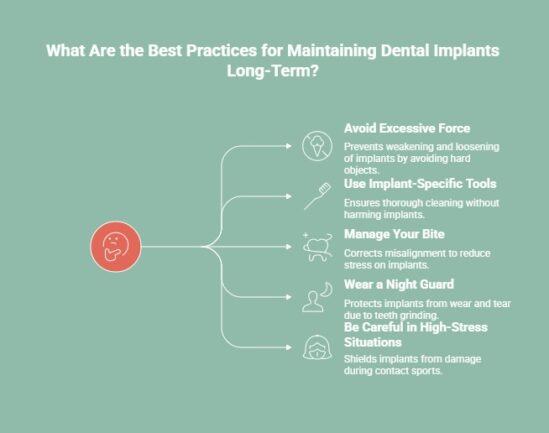
To keep your dental implants in excellent condition over the long term, focusing on consistent long-term care of dental implants is crucial. Here are some essential practices that will help maintain the health and functionality of your implants.
- Avoid Excessive Force on Your Implants: Avoid putting undue pressure on your implants by refraining from habits like chewing on hard objects such as ice, pens, or hard candies. These actions can weaken the implant over time, potentially causing it to loosen or fail.
- Use an Implant-Specific Cleaning Tool: Regular brushing and flossing are crucial, but using implant-specific tools provides a more thorough clean. Soft brushes, implant floss, and oral irrigators effectively remove plaque without harming the implant.
- Manage Your Bite: If you experience any discomfort when biting down or feel that your implants are misaligned, talk to your dentist. An incorrect bite can place excess stress on your implants, leading to potential issues like loosening or implant failure.
- Wear a Night Guard if Necessary: If you tend to grind your teeth at night, wearing a custom-made night guard can protect your dental implants from unnecessary wear and tear. Teeth grinding can loosen or damage implants if left unaddressed.
- Be Careful with Implants in High-Stress Situations: If you’re participating in contact sports, make sure to wear a mouthguard to protect your implants. High-impact situations could damage the implants or surrounding bone, so it’s important to shield them with the proper protection.
What Are the Risks and How to Prevent Complications After Dental Implant Surgery?
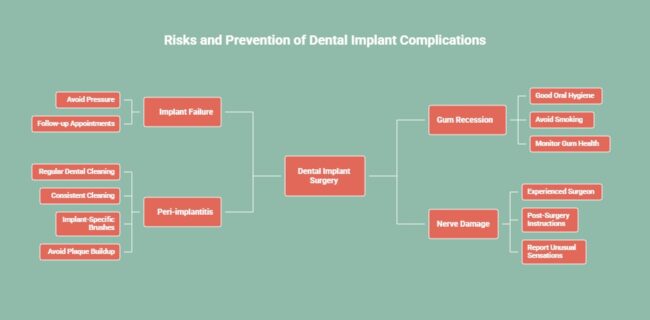
It’s essential to be aware of the potential complications that can arise after dental implant surgery. Here are some of the most common risks and tips on how to avoid them for a smooth recovery.
- Implant Failure: Implant failure can occur if the implant does not properly integrate with the jawbone. To avoid this, be cautious about avoiding unnecessary pressure on the implant during the healing process and attend regular follow-up appointments.
- Gum Recession: Gum recession can sometimes occur around the implant, leading to exposure of the implant post. This can be prevented by practicing good oral hygiene, avoiding smoking, and ensuring your dentist monitors gum health during check-ups.
- Peri-implantitis: This inflammatory condition, similar to gum disease, affects the tissues around the implant. Prevent it through regular dental cleaning, consistent cleaning of the implant site, the use of implant-specific brushes, and by avoiding plaque buildup.
- Nerve Damage: Nerve damage, although rare, can cause numbness or tingling in the surrounding areas. Choose an experienced dental surgeon, follow post-surgery instructions, and report any unusual sensations to your dentist immediately.
How to Care for Dental Implants in Special Cases?
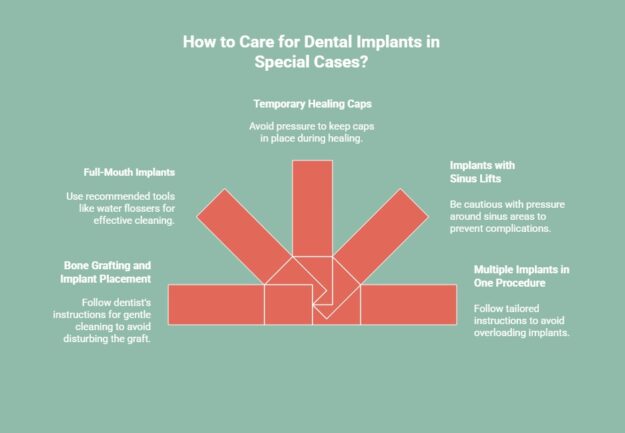
In some dental implant cases, such as bone grafting or full-mouth restorations, the healing process can be more complex. Following specific aftercare instructions tailored to your situation is essential to ensure the success and longevity of your implants. Here are some considerations for special cases:
- Bone Grafting and Implant Placement: If you’ve had bone grafting before your implants, it’s crucial to give the grafted area extra care during the healing process. Follow your dentist’s instructions for gentle cleaning around the area to avoid disturbing the graft while it heals.
- Full-Mouth Implants: For full-mouth implants, it’s important to maintain a meticulous cleaning routine, as multiple implants are involved. Your dentist may recommend specific cleaning tools, like water flossers, to clean around each implant effectively.
- Temporary Healing Caps: If you have temporary healing caps placed over the implants, avoid applying too much pressure while brushing or eating. This ensures that the caps remain in place during the healing process.
- Implants with Sinus Lifts: If you’ve had a sinus lift procedure, be cautious with any pressure around the sinus areas. Your dentist will advise you on how to care for the surgical site to prevent any complications.
- Multiple Implants in One Procedure: If you’ve had several implants placed in one procedure, your dentist may give you tailored instructions to avoid overloading any single implant during the healing period. Regular follow-ups are important to ensure that all implants heal properly.
When Should You Contact Your Dentist During Dental Implant Recovery?
If you’ve recently had a dental implant, monitoring your recovery is key to a smooth healing process. While some swelling and discomfort are normal, prolonged or worsening pain could indicate a problem that needs attention. Addressing concerns early on is essential to avoid complications that could slow your recovery.
Certain signs, such as persistent bleeding, fever, or an unusual bad taste in your mouth, may suggest an infection or another issue. If any of these symptoms appear, it’s important to reach out to your dentist immediately.
For any concerns about your recovery, schedule an appointment with us at Dentist Tree of the Heights. We’re here to ensure your recovery is as smooth as possible.
Why Choose Dentist Tree of the Heights for Your Post-Dental Implant Care?
Choosing the right dental care provider after your implant surgery is crucial for a successful recovery. At Dentist Tree of the Heights, we offer personalized, compassionate care tailored to your unique needs, ensuring your implants heal properly and effectively. Our experienced team uses the latest technology to monitor your progress and address any concerns promptly.
We understand that post-implant care goes beyond just the procedure itself. We guide you through each step of recovery, from pain management to oral hygiene practices, helping you avoid common pitfalls and achieve the best possible results. Our goal is to make your journey to a healthier smile as smooth and stress-free as possible.
For expert post-implant care and peace of mind, book your consultation online today. Let us help you maintain a long-lasting, beautiful smile with the care you deserve.
Conclusion
Taking care of your dental implants is crucial to ensuring their long-term success. By following proper aftercare practices, from maintaining excellent oral hygiene to adhering to your dentist’s instructions, you are setting yourself up for a smooth recovery and lasting results.
It’s important to maintain daily care, follow food restrictions, and attend regular check-ups to ensure your dental implants function like natural teeth. Remember, every patient’s recovery journey is unique, so if you experience any issues or discomfort, don’t hesitate to seek professional advice.
Frequently Asked Questions
How long does it take to heal after dental implant surgery?
Healing after dental implant surgery typically takes one to two weeks for initial recovery. However, full integration with your jawbone, called osseointegration, may take several months. Your dentist will guide you throughout the healing process.
Can I use mouthwash or brush my teeth after getting dental implants?
Yes, oral hygiene is vital. Gently brush your teeth while avoiding the implant site for the first couple of days. Afterward, carefully clean around the implant and use an alcohol-free mouthwash, as recommended by your dentist.
What signs of infection should I watch for after dental implant surgery?
Watch for persistent pain, swelling, pus, fever, or a bad taste in your mouth. If any of these symptoms appear, contact your dentist immediately to prevent complications and ensure the health of your implant. Dentist Tree of the Heights is here to help with any concerns.
How often should I follow up with my dentist during recovery?
Regular follow-up appointments are crucial to ensure proper healing. Typically, your dentist will schedule check-ups within the first few weeks and additional visits to monitor the implant’s success. Dentist Tree of the Heights will guide you through recovery.
What is normal pain or swelling after dental implant placement?
Mild pain, swelling, and tenderness are normal for the first few days after surgery. These symptoms usually peak within 48–72 hours and should gradually subside. Any unusual pain should be addressed with your dentist.
How to care for full mouth dental implants?
Caring for full mouth implants requires maintaining good oral hygiene, using soft-bristle brushes, flossing carefully, avoiding hard or sticky foods, and attending regular dental check-ups for optimal health and longevity of the implants.
How to take care of dental implants?
To take care of dental implants, brush gently with a soft-bristled toothbrush, floss regularly, and avoid hard foods. For personalized aftercare and maintenance guidance, visit Dentist Tree of the Heights for expert support.
How long do dental implants last?
With regular oral care and dentist visits, dental implants can last a lifetime. However, neglecting oral hygiene or smoking can lead to complications such as peri-implantitis, which can reduce the lifespan of your implants.
How long do food restrictions last after dental implants?
For the first one to two weeks, stick to a soft-food diet to prevent putting pressure on the implant. Afterward, gradually reintroduce regular foods based on your healing progress, as guided by your dentist.
What can cause dental implant failure?
Implant failure can result from infection, inadequate bone support, or poor oral hygiene. Avoiding these issues through consistent care and following your dentist’s instructions will help prevent complications and ensure the longevity of your implant.