

Key Highlights
- Having one or more missing teeth is the most direct sign that you may need a dental implant.
- A dental implant procedure provides a permanent tooth replacement solution for various dental issues.
- If you struggle with loose dentures or bridges, implants offer a more stable and comfortable alternative.
- Difficulty chewing or visible changes in your facial structure can indicate the need for implants.
- Dental implants prevent jawbone loss that occurs after losing a tooth.
- Ultimately, this treatment can significantly improve your overall comfort and quality of life.
Struggling with missing teeth can feel isolating, but it’s more common than you might think. In fact, nearly 1 in 4 adults have lost a tooth by the age of 74, affecting everything from their confidence to their daily routines.
Losing a tooth isn’t just about an empty space in your smile; it can change the way you eat, talk, and feel about yourself. For many, it creates a constant worry that affects quality of life. But there’s good news: dental implants offer a permanent, natural solution to restore both your smile and your confidence.
In this blog, we’ll walk you through the signs that indicate dental implants might be the right choice for you, so you can enjoy life without the stress of missing teeth.
What Are The 8 Signs You Need Dental Implants?
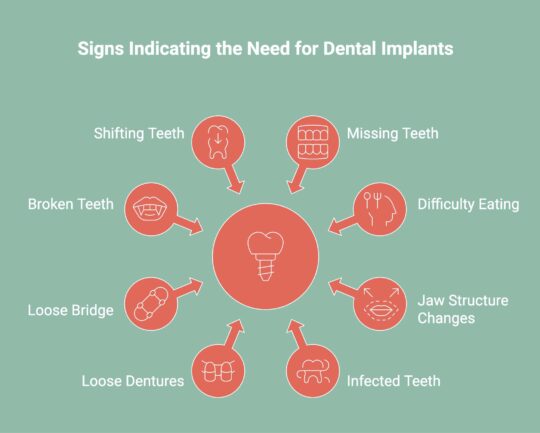
Dental problems can reach a point where temporary fixes are no longer enough. If missing teeth, discomfort, or changes in your bite are affecting your daily life, dental implants may offer the secure and long-lasting solution you need. They help restore confidence, function, and oral health in ways traditional dentures or bridges often cannot.
Below are eight clear signs that dental implants might be the right choice for you.
1. You Have One Or More Missing Teeth
Missing teeth can significantly impact more than just your smile. They can lead to shifting of adjacent teeth, making your bite uneven and more difficult to clean. Over time, this misalignment may cause further dental issues, such as increased plaque buildup, gum disease, and even tooth decay.
Dental implants are a comprehensive solution as they replace both the root and the crown of the missing tooth. Unlike bridges or dentures, implants do not rely on nearby teeth for support, meaning the health of your surrounding natural teeth is preserved.
Implants are anchored directly into the jawbone, stimulating it much like a natural tooth root would, which also helps maintain healthy bone density and structure in the long term
2. You Have Difficulty Eating
If chewing has become uncomfortable or you find yourself avoiding certain foods due to pain or instability, your teeth may no longer be supporting you properly.
Traditional dentures and bridges can sometimes slip or move, making it difficult to enjoy meals. Dental implants, however, provide a stable and permanent solution.
They function just like your natural teeth, offering full chewing power without discomfort. The implant integrates with the jawbone, providing the stability needed to chew your favorite foods, whether it’s an apple, steak, or crunchy veggies, without worrying about slippage or painful pressure points.
3. You Have Visible Changes In Your Jaw Structure
One of the significant effects of missing teeth is jawbone deterioration. When a tooth is lost, the underlying bone begins to shrink over time because the bone no longer receives stimulation from a tooth root.
This can lead to a sunken appearance in the face, making you look older and less healthy.
Dental implants are unique in that they replace the tooth root, allowing the jawbone to naturally heal and maintain its structure. By stimulating the bone through a process called osseointegration (where the implant fuses with the bone), implants help prevent bone loss, preserving both your facial structure and your oral health.
This results in a more youthful appearance with a more defined jawline and facial contour.
4. You Have Infected Teeth
If you have teeth that are severely infected and cannot be saved with root canal therapy or other treatments, they may need to be extracted. Dental implants offer a clean, healthy replacement after extraction, minimizing the risk of further infection.
Infected teeth, if left untreated, can cause abscesses or spread bacteria to surrounding tissues, potentially leading to more severe health issues. Dental implants prevent bone deterioration that occurs after a tooth extraction and maintain the function of the jaw.
By replacing the tooth with an implant, you protect your mouth from further infection and help restore both the appearance and functionality of your smile.
5. You Have Loose Dentures
Loose, uncomfortable dentures can be a significant inconvenience, requiring frequent adjustments, adhesives, and causing pain or sores in the mouth.
Over time, as the jawbone changes shape, dentures can become even less secure. Implant-supported dentures offer a much more stable solution. By anchoring the dentures to dental implants, the dentures stay securely in place, eliminating the need for adhesives or constant adjustments.
This improvement in stability means you can eat, speak, and smile with confidence, knowing that your dentures won’t shift or cause discomfort. Additionally, implant-supported dentures protect your jawbone and help prevent further bone loss, which often happens with traditional dentures.
6. You Have A Loose Bridge
Dental bridges rely on the support of adjacent teeth to stay in place, but over time, those supporting teeth can weaken, become decayed, or even fail.
When a bridge becomes loose or fails, replacing it with implants offers a more reliable, long-term solution. Implants stand independently, without the need to grind down or compromise healthy adjacent teeth. They offer better stability and durability, and unlike traditional bridges, they don’t develop cavities.
Implants also provide a more natural, comfortable fit, as they don’t require the alteration of surrounding teeth. Multiple implants can support a full bridge, ensuring a strong and lasting restoration without sacrificing the health of neighboring teeth.
7. Your Teeth Are Broken Or Severely Cracked
Teeth that are severely cracked or broken beyond repair can be painful and difficult to restore with traditional dental treatments. In many cases, the damage may be extensive, with fractures extending below the gumline. In such cases, extraction followed by the placement of a dental implant is often the best solution.
Dental implants are strong and durable, designed to handle the forces of normal chewing without the risk of future fractures. They restore both the form and function of your teeth, allowing you to speak and eat without pain.
The implant post integrates with your jawbone, providing a solid foundation that won’t shift, unlike a temporary solution like a dental crown that may not be as stable in the long term.
8. Your Teeth Are Shifting, Or Your Bite Feels Different
When teeth start shifting or your bite feels off, it’s often a sign that the jawbone is deteriorating or that gum disease is present. Teeth may shift over time, leading to misalignment or bite problems.
This can result in discomfort while chewing or even cause uneven wear on your remaining teeth. Dental implants help stabilize your bite by replacing missing teeth and providing support for the surrounding teeth.
This prevents further shifting and misalignment, keeping your teeth in their proper place. Implants also help restore the function of your bite, ensuring that you can chew properly and maintain a healthy, comfortable mouth.
If you experience any of these signs, dental implants could be the solution to restore both the function and appearance of your smile, improving your overall quality of life.
What Are The Key Benefits Of Getting A Dental Implant?
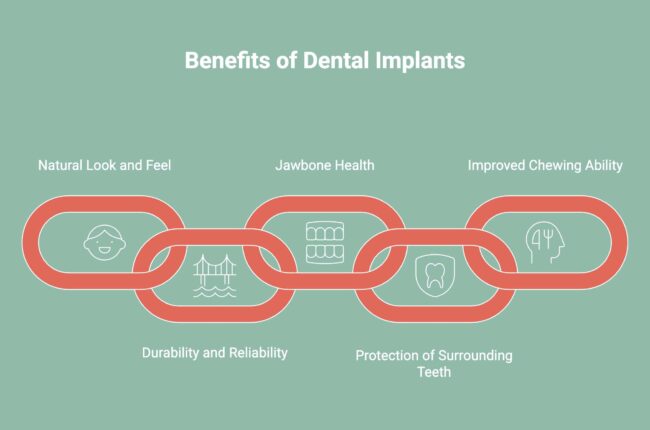
Dental implants don’t just fill the gap left by missing teeth; they improve your daily life in meaningful ways. With implants, you can enjoy eating your favorite foods without discomfort, speak clearly without worrying about slippage, and smile confidently, knowing your teeth look natural.
These implants restore both function and appearance, allowing you to live without the limitations that come with other tooth replacement options.
Here are some valuable benefits you can expect from dental implants.
1. Natural Look And Feel
Dental implants are designed to mimic the natural structure of your teeth, providing a seamless appearance that blends in perfectly with the rest of your smile. The implant is made from biocompatible materials like titanium, which fuse with the jawbone over time, ensuring the implant feels as secure as your natural teeth.
Because of this, implants are comfortable to wear and offer a stable fit, eliminating concerns about slipping or shifting. Most people won’t even realize you’ve had a dental implant placed; your smile will look and feel completely natural.
2. Durability And Long-Term Reliability
One of the greatest advantages of dental implants is their exceptional longevity. With proper care, dental implants can last for decades, or even a lifetime, making them a reliable solution for tooth replacement. Unlike dentures that may need to be replaced over time, implants provide a lasting fix.
The durability of implants makes them a cost-effective choice in the long run, as they require fewer replacements and maintenance compared to other forms of tooth replacement.
3. Helps Preserve Jawbone Health
When a tooth is lost, the underlying jawbone can begin to deteriorate due to the lack of stimulation from the tooth root. Dental implants help prevent this by acting as artificial tooth roots that stimulate the bone, encouraging its natural growth and maintenance.
This process, called osseointegration, helps preserve the integrity of your jawbone, preventing bone loss. Maintaining healthy jawbone density is crucial for facial appearance and the overall structure of your mouth, as it helps avoid the sunken or hollow look that can develop from bone resorption.
4. Protects Surrounding Teeth
Unlike dental bridges, which require the adjacent teeth to be filed down for support, dental implants do not interfere with neighboring teeth. This means that the integrity of your natural teeth remains intact. Implants are placed directly into the jawbone, leaving surrounding teeth unaffected and unaltered.
This helps to prevent any damage to healthy teeth, and unlike other tooth replacement methods, the need for additional procedures to support the implant is minimal.
5. Improved Chewing And Eating Ability
One of the most noticeable benefits of dental implants is the significant improvement in your ability to chew and eat. Unlike dentures, which can slip or cause discomfort while eating, dental implants function like natural teeth, restoring nearly full chewing capacity.
Whether you’re eating tough steak or crunchy vegetables, implants allow you to enjoy a wide variety of foods without discomfort. This increased stability also helps you regain the confidence to eat without the worry of your teeth shifting or falling out, offering a substantial improvement over other tooth replacement options.
What Are the Different Types of Dental Implants?
Dental implants are a popular and effective solution for replacing missing teeth, but it’s important to understand the different types available to choose the right one for your needs. Here’s a quick overview of the most common types of dental implants:
- Endosteal Implants: These are the most commonly used types of dental implants. They are surgically placed directly into the jawbone and are typically made of titanium. Once the bone heals, a crown, bridge, or denture can be attached to the implant.
- Subperiosteal Implants: Used when there is not enough healthy jawbone to support traditional implants, subperiosteal implants are placed on top of the jawbone, under the gum tissue. This type is less common but can be an option for people who cannot undergo bone grafting procedures.
- Zygomatic Implants: This is a less common and more complex type of dental implant, often used in cases of severe bone loss. Zygomatic implants are anchored into the cheekbone (zygoma) rather than the jawbone, offering an alternative for those who have insufficient bone mass in the upper jaw.
Each type of dental implant comes with specific considerations regarding the procedure, recovery time, and overall cost. Consulting with a dental specialist will help you determine which implant type is best suited for your individual needs.
How Does Your Overall Health Affect Dental Implant Candidacy?
Your overall health plays a significant role in determining whether dental implants are the right solution for you. Factors such as bone density, oral hygiene, and existing medical conditions can influence the success of the procedure. For instance, conditions like diabetes or smoking may affect healing, while inadequate bone structure could require additional treatments like bone grafting.
Here are some health factors that affect dental implant candidacy:
- Bone density: Adequate bone structure is required for successful implantation. If bone loss has occurred, additional procedures like bone grafts may be needed.
- Oral health: Healthy gums and teeth are essential. Gum disease or tooth decay can affect the implant’s success.
- Chronic conditions: Conditions like diabetes or heart disease can impact healing and increase the risk of complications.
- Lifestyle choices: Smoking and excessive alcohol consumption can interfere with the healing process.
By understanding these factors, you and your dentist can determine the best approach for a successful implant procedure, ensuring a long-lasting solution to your tooth loss.
How Many Dental Implants Might You Need?
When considering dental implants, one of the key questions is how many implants you’ll need to restore your smile. This depends on the number of missing teeth, your overall dental health, and whether you need a single implant or a more complex solution like a full arch replacement.
Here are some common scenarios:
- Single tooth replacement: One implant per missing tooth is the typical solution.
- Multiple teeth replacement: If several teeth are missing, fewer implants might be needed, with bridges or crowns supported by the implants.
- Full arch replacement: For replacing a full set of teeth, a technique known as “All-on-4” can often replace an entire arch with just four implants.
Once you know how many implants you need, your dentist will outline the best course of action, tailoring the treatment plan to restore both function and aesthetics in the most efficient way possible.
How Long Will It Take To Get My Dental Implants?
The dental implant journey typically spans 3 to 9 months, depending on individual oral health and treatment complexity. Here’s a breakdown of each phase:
- Initial Evaluation (Week 1): Your journey begins with a thorough consultation, where the dentist assesses your oral health, takes X-rays, and discusses your goals. If needed, your dentist may recommend additional treatments like bone grafting to ensure a strong foundation for the implant.
- Implant Placement Surgery (Month 1): The next step involves the surgical placement of the implant post into your jawbone. This procedure is typically done under local anesthesia and may take a few hours. Post-surgery, you’ll need a few days of rest for initial healing.
- Healing and Osseointegration (Months 1-3): After the implant is placed, your body enters the healing phase, known as osseointegration. During this time, the implant fuses with your jawbone, creating a stable base for the final restoration. This can take anywhere from 3 to 6 months, depending on your healing speed.
- Attaching the Abutment (Months 4-6): Once the implant has fully integrated with the bone, the dentist will attach an abutment, a small connector piece that will hold the final crown or restoration. This process is usually quick and relatively simple, though some healing time is still required.
- Final Restoration (Months 6-9): After the abutment is placed, the final step is attaching the crown, bridge, or denture. Your dentist will take impressions and ensure the restoration matches your natural teeth in size, shape, and color. Once the final restoration is placed, your dental implant is complete.
Some patients may qualify for immediate or same-day implants, where the procedure is accelerated, but this is typically suited for those with adequate bone structure. Throughout the process, your dentist will provide personalized guidance, ensuring you’re on track for a successful outcome.
Why Choose Dentist Tree Of The Heights For Dental Implants In Houston, TX?
If you’re ready to restore your smile with a permanent and natural-looking solution, Dentist Tree of the Heights is committed to delivering beautiful, affordable dental implants that truly feel like your own. Whether tooth loss was caused by severe cavities, periodontal disease, or dental trauma, leaving gaps untreated can lead to jawbone loss, shifting teeth, facial sagging, and further dental issues.
Our expert periodontists provide fully artificial teeth, root and all, to strengthen your jaw and keep your mouth healthy for years. Enjoy implants designed to look and function like your natural teeth.
Schedule your appointment today and take the first step toward a confident, complete smile. Book a consultation today to get started!
Conclusion
If you’re noticing any of the signs mentioned, it’s a great time to consider dental implants. They not only restore your confidence but also protect long-term oral health by acting like a natural tooth root. Implants help maintain bone density and offer lasting stability, whether you’re replacing a single tooth or supporting dental crowns, ensuring comfort and durability. With dental implants, you can enjoy a natural-looking smile and regain full function without the discomfort of alternative solutions. Take the first step towards a healthier, more confident you by exploring implant options with your dentist today.
Frequently Asked Questions
Are loose dentures or bridges a sign that dental implants are needed?
Yes, loose traditional dentures or bridges are a strong sign that you may benefit from a dental implant procedure. Implants offer a much more stable and permanent tooth replacement, eliminating the slipping and discomfort associated with these common dental problems.
Does bone loss in my jaw mean I need dental implants?
Bone loss is a very good reason to consider dental implants, as they are the only solution that can stop further jawbone deterioration. Even if you have lost jawbone density, procedures like bone grafting can often make implant placement possible.
Can chronic gum disease affect candidacy for dental implants?
Yes, active gum disease must be treated and managed before you can undergo an implant procedure. Healthy gum tissue is essential for the long-term success of an implant. Once your gum disease is under control, you can get implants.
Can persistent dental pain or discomfort be a reason to consider dental implants?
Yes, ongoing pain or discomfort that affects daily function can signal deeper issues like infection or structural damage. Asking do I need a dental implant is reasonable when pain continues despite treatment.
How do I know if my missing tooth should be replaced with a dental implant?
If a missing tooth affects chewing, speech, or confidence, replacement is often recommended. Wondering do I really need a dental implant is common when gaps begin causing functional or cosmetic concerns.
Is difficulty chewing food a sign that I may need dental implants?
Chewing difficulty, especially avoiding certain textures or favoring one side, can indicate weakened support or instability. It’s a clear sign implants may restore normal function and prevent further bite issues.
Is a shifting bite or teeth moving out of place a sign I need dental implants?
Yes. Teeth shifting or bite changes often happen after tooth loss due to reduced support. Implants help stabilize alignment and prevent complications such as bone loss and uneven pressure on remaining teeth.
When is tooth decay advanced enough that dental implants are recommended?
If decay progresses beyond restoration, damages roots, or repeatedly fails treatments, extraction and implant placement may be necessary. Dentists evaluate structural health to determine how many dental implants do I need.
Does chronic gum disease make someone a candidate for dental implants?
Chronic gum disease can lead to tooth loss and bone damage. Once treated and stabilized, implants may be possible, and your dentist will assess healing and bone levels to decide how many dental implants do you need.