

Key Highlights
- Invisalign treatment is an effective method for overbite correction in many mild to moderate cases.
- The process uses a series of custom-made clear aligners to gradually improve bite alignment.
- Invisalign can address issues caused by an overbite, such as uneven wear on your front teeth.
- Treatment for adults and teens is possible, though the approach may vary based on jaw development.
- For severe overbites, other treatment options like traditional braces might be recommended.
- A personalized consultation is essential to determine if clear aligners are right for you.
If you have an overbite, you might be looking for a discreet and effective way to fix it. While traditional braces have long been the standard solution, modern orthodontic treatment has introduced new possibilities.
Many people now wonder if Invisalign offers a viable path for overbite correction. The good news is that for many individuals, clear aligners can successfully address this common bite misalignment.
This guide explores how Invisalign works to fix an overbite and what you can expect from the treatment.
What Is an Overbite and What Problems Can It Cause?
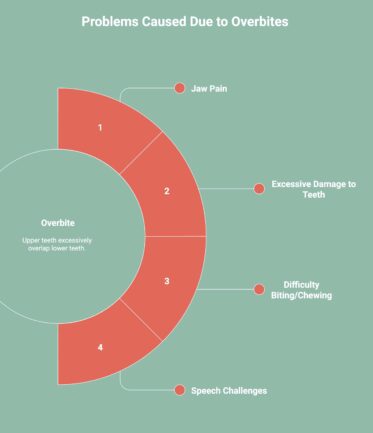
An overbite occurs when the upper front teeth overlap the lower front teeth more than they should. A small overlap is normal and helps with proper biting and speech, but a deep or severe overbite can lead to both functional and aesthetic issues. When left untreated, it can affect jaw alignment, appearance, and the long-term health of your teeth and gums.
If you are interested in seeing how Invisalign can correct overbites, many orthodontic providers offer before-and-after examples showcasing real patient transformations. These photos and case studies demonstrate how Invisalign successfully improves overbite alignment, resulting in both functional and aesthetic enhancements.
Common issues associated with an untreated overbite include:
- Jaw pain or TMJ discomfort.
- Uneven or excessive wear on teeth.
- Difficulty biting or chewing certain foods.
- Increased chance of gum irritation or tooth decay.
- Speech challenges or changes in facial profile.
Addressing these concerns through jaw overbite correction can improve both function and smile aesthetics, helping maintain better long-term oral health. If you suspect a deep overbite, a professional evaluation is the best first step.
Many people wonder if using Invisalign for overbite correction is effective, and the answer is yes! Clear aligners can successfully guide teeth into a healthier position in many cases.
How Does Invisalign Fix Overbite?
Invisalign corrects an overbite by using a series of clear, custom-fit aligners that gently guide your teeth and jaw into better alignment over time. Instead of only straightening teeth, the treatment focuses on improving how the upper and lower teeth meet, helping reduce excessive overlap and improving overall bite function. With a personalized digital treatment plan, you can see each step of progress and understand how your bite will improve before treatment even begins.
Many patients prefer this option because the aligners are nearly invisible, removable for eating and brushing, and more comfortable than metal braces.
How Exactly Does Invisalign Help With Overbite?
The science behind Invisalign for overbite correction involves applying controlled force to specific teeth. Here’s how the process works;
- Invisalign fixes an overbite by gradually moving the upper and lower teeth into a healthier position so the bite becomes properly balanced.
- The aligners help reduce too much overlap between the top and bottom teeth, which improves comfort and protects against long-term wear and damage.
- By improving how the teeth meet, Invisalign makes chewing easier and reduces strain on the jaw joint.
- Over time, this leads to better function, a more comfortable bite, and a more confident smile.
How Long Does It Usually Take for Invisalign to Correct an Overbite?
Invisalign overbite correction typically takes 6 months to 2 years, depending on the severity of the bite and how closely the treatment plan is followed.
Here are the factors that affect treatment time;
- Severity of the overbite (mild cases correct faster than complex ones).
- Wearing aligners consistently for 20 to 22 hours per day.
- Age and overall dental health.
- Use of attachments or rubber bands if needed.
- Regular orthodontic check-ins to monitor progress.
If you’re considering putting Invisalign on overbite to improve your smile, it’s a good idea to talk with an orthodontist who can take a close look at your bite and let you know if aligners are the right option for you.
Does Invisalign Work for All Types of Overbites?

Invisalign can successfully treat many types of overbites, especially mild and moderate cases. However, the effectiveness depends on both the bite type and how severe the misalignment is. Some complex overbites may need additional orthodontic support.
Let’s see what types of overbite Invisalign can help with:
- Dental overbite: Teeth are misaligned, but jaw structure is normal. Invisalign can usually correct this type because clear aligners effectively guide teeth into a healthier position.
- Skeletal overbite: Caused by mismatched upper and lower jaw growth. Invisalign alone typically cannot fix severe cases, since jaw-related issues often require braces or surgical support.
- Vertical deep bite: Upper teeth cover most of the lower teeth. Invisalign can often improve mild to moderate cases by gradually reducing excessive overlap.
- Horizontal overbite: Upper teeth noticeably protrude forward. Invisalign may help mild to moderate cases, while severe protrusion may require additional orthodontic treatment.
If you want to understand the basics of maintaining great oral hygiene, check out our guide on Oral Hygiene.
What Should I Expect During Invisalign Treatment for an Overbite?
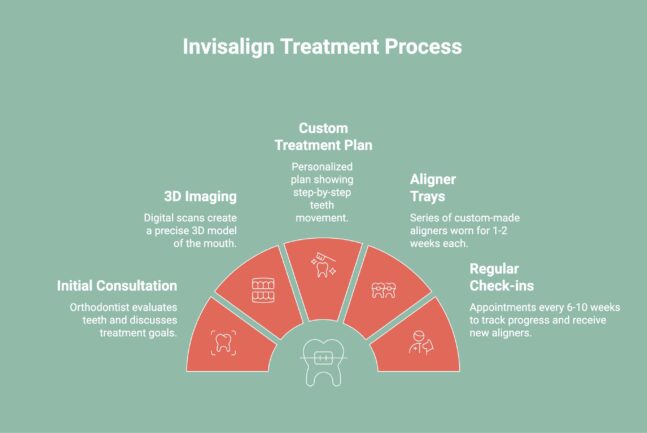
Embarking on your Invisalign journey for an overbite is an exciting step toward a healthier smile. The treatment process is designed to be as smooth and predictable as possible. You will receive a series of custom aligners, switching to a new set every one to two weeks to keep your teeth moving. Your treatment experience will involve regular check-ins with your orthodontist to monitor progress toward your treatment goals.
Maintaining good oral hygiene is simple since the aligners are removable. Below, we’ll walk through the process step-by-step and discuss what you can expect in terms of a timeline for seeing results.
The steps include:
- Initial consultation: Your orthodontist evaluates your teeth, discusses goals, and determines whether Invisalign is the right treatment for your needs.
- 3D Imaging: Your orthodontist will take precise digital scans of your mouth to create a 3D model.
- Custom Treatment Plan: Using this model, a personalized treatment plan is designed, showing the step-by-step movement of your teeth.
- Receiving Your Aligner Trays: You’ll get a series of custom-made aligner trays, each designed to be worn for 1-2 weeks.
- Regular Check-ins: You will have appointments every 6-10 weeks to track your progress and receive your next set of aligners.
If you want to explore how dental insurance with no waiting period can benefit you, check out Why Dental Insurance with No Waiting Period is a Game Changer.
How Does Invisalign Compare to Braces for Correcting an Overbite?
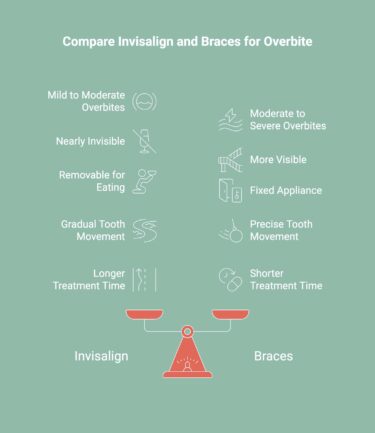
Both Invisalign and braces can correct an overbite, but each option has strengths depending on the severity of the case and patient preference.
Invisalign
- Best for mild to moderate overbites.
- Nearly invisible and more comfortable to wear.
- Removable for eating and brushing.
- Gradual, gentle tooth movement with less irritation.
- May take longer or need extra support for complex cases.
Braces
- Effective for moderate to severe overbites.
- Provides stronger and more precise control over tooth and jaw movement.
- Fixed appliance, so treatment does not rely on patient compliance.
- Can correct complicated issues such as severe deep bites or major misalignment.
- More visible and may cause more discomfort.
Choosing between Invisalign and braces depends on the type and severity of the overbite and the results you want to achieve.
Why Choose Dentist Tree of the Heights for Overbite Treatment With Invisalign?
If you’re considering Invisalign and want expert care in a comfortable and supportive environment, Dentist Tree of the Heights is here to help. Our experienced team provides personalized treatment plans, advanced technology, and a patient-first approach to ensure you feel confident and informed throughout your smile journey. We take the time to understand your goals, explain every step clearly, and make orthodontic treatment as easy and stress-free as possible.
Whether you’re dealing with a mild overbite or exploring your options for more complex correction, we’re committed to helping you achieve a healthier, balanced, and beautiful smile.
Ready to get started? We would love to meet you. Schedule your consultation today and take the first step toward a more confident smile.
Conclusion
Addressing an overbite with Invisalign can lead to significant improvements in both appearance and oral health. This innovative treatment offers a discreet and comfortable alternative to traditional braces, making it suitable for both adults and teens. With the right approach, including understanding the types of overbites and knowing what to expect throughout the process, you can achieve a more aligned smile.
Frequently Asked Questions
How long does it take Invisalign to fix overbite?
The time Invisalign takes to fix an overbite varies depending on the severity and consistency of aligner wear. Most mild to moderate cases take between six months and two years, though severe overbites may require additional orthodontic support options.
Do I need to see a specialist to get Invisalign for my overbite?
Seeing a specialist is recommended when seeking Invisalign for an overbite, since orthodontists have advanced training in diagnosing bite problems and planning complex tooth movement. They can determine whether clear aligners alone are appropriate for your needs.
What kind of results can I expect from using Invisalign to treat an overbite?
Using Invisalign to treat an overbite typically results in a more balanced bite and improved smile alignment. Many patients notice gradual progress within months, with final outcomes including better function, comfort, and confidence after consistent wear long-term benefits.
How can Invisalign be used to fix overbites or underbites?
Invisalign can fix overbites or underbites by using a sequence of custom aligners that apply gentle pressure to gradually shift teeth. Attachments or elastics may enhance movement, guiding the bite into healthier alignment and improving jaw function effectively.
Can Invisalign fix a receding chin caused by an overbite?
Invisalign may improve a receding chin caused by an overbite when the issue is primarily dental, since aligning the bite can enhance facial balance. However, skeletal problems involving jaw structure often require surgical or orthodontic approaches for change.
Can Invisalign effectively fix an overbite in adults and teens?
Yes, Invisalign can be an effective treatment for both adults and teens struggling with an overbite. The treatment is suitable for patients of all ages, though the approach might differ slightly.
Does Invisalign help overbite issues, and how do you know if you’re a good candidate for treatment?
Yes, Invisalign can help many overbite issues by gradually repositioning teeth to improve alignment, comfort, and smile aesthetics. Candidacy depends on whether the overbite is mild or moderate, and an orthodontic evaluation determines suitability and expected results effectively.
How long does Invisalign take to fix overbite problems from start to finish for most patients?
Most overbite cases treated with Invisalign take six months to two years, depending on the severity and consistency of wearing aligners daily. Treatment time varies when attachments or elastics are required for improved control and precise movement progression throughout care.
Does Invisalign work for overbite cases that are causing discomfort or cosmetic concerns?
Yes, Invisalign works for many overbite cases affecting comfort or appearance by gradually reducing excessive overlap and improving alignment. Severe skeletal overbites may need additional treatment, and patients can review before-and-after photos to see real treatment results.
Can Invisalign correct overbite alignment without needing braces or more invasive treatment options?
Yes, Invisalign can correct overbite alignment without braces when the issue is mild or moderate and related to tooth positioning. Overbites caused by jawbone discrepancies often need combined orthodontics or surgery because aligners alone cannot reposition skeletal structure.