

Key Highlights
- The price for Invisalign in Houston typically ranges from $3,000 to $8,000.
- Your final treatment cost depends on the complexity of your orthodontic treatment needs.
- Many dental insurance plans offer partial coverage for clear aligners, similar to braces.
- Flexible payment options and third-party financing are available to make your new smile affordable.
- An initial consultation will give you a transparent and personalized price for your orthodontic treatment.
Are you dreaming of a straighter, more confident smile but feel concerned about the cost? You’re not alone. Many people in Houston consider Invisalign treatment as a discreet way to align their teeth, and a common first question is about the price.
Understanding the factors that influence cost, what your dental insurance may cover, and the available payment options is the first step.
This guide will help you understand the investment required for a beautiful smile, so you can make an informed decision without financial stress.
What Is Invisalign and How Can It Help Straighten Your Teeth?
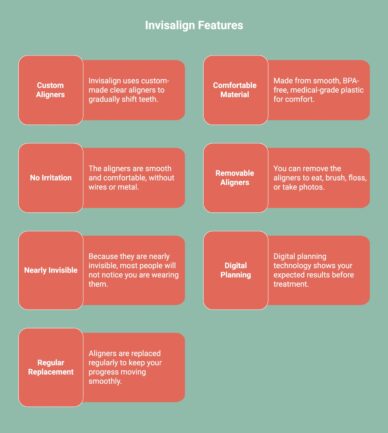
Invisalign is a modern way to straighten your teeth using clear, removable aligners instead of metal braces.
If you want a straighter smile but feel uncomfortable about the look or restrictions of traditional braces, Invisalign can be a discreet solution. Many people choose it because it fits easily into everyday life without drawing attention or limiting what you can eat or do.
Key features of Invisalign:
- Invisalign uses custom-made clear aligners that gradually and gently shift your teeth into proper alignment.
- Made from smooth, BPA-free, medical-grade plastic that feels comfortable to wear.
- The aligners are smooth and comfortable to wear, without wires or metal that can irritate your cheeks or gums.
- You can remove the aligners to eat, brush, floss, or take photos, which keeps your daily routine simple.
- Because they are nearly invisible, most people will not notice you are wearing them.
- Digital planning technology shows your expected results before treatment begins, giving you peace of mind.
- Aligners are replaced regularly to keep your progress moving smoothly.
How Does Invisalign Work to Align Teeth?
Invisalign straightens your teeth by using a series of clear, removable aligners that gently shift your teeth into better alignment over time. Each aligner is designed to make small, gradual adjustments, building progress step by step for a smoother transformation.
Here are the steps in the Invisalign process;
- Your dentist begins with a digital 3D scan to create a personalized treatment plan and preview your expected results.
- Custom clear aligners are created to match your treatment plan and fit comfortably over your teeth.
- Each aligner applies gentle, controlled pressure to guide your teeth into improved positions.
- You wear each set of aligners for about one to two weeks before switching to the next stage.
- With every new aligner, you move closer to your final smile and see steady progress along the way.
- As your teeth align, cleaning and maintaining your oral health becomes easier and more effective.
What Are the Benefits of Choosing Invisalign Over Braces?
Many people want straighter teeth but hesitate because they worry about the discomfort of braces, the difficulty of eating with brackets and wires, or the frustration of cleaning around them after every meal.
It can feel discouraging to picture years of metal brackets cutting into your cheeks, avoiding favorites like popcorn or apples, or scheduling constant tightening appointments. That is why Invisalign has become a popular choice for those looking for an easier orthodontic journey that fits smoothly into real life.
Benefits that make Invisalign stand out;
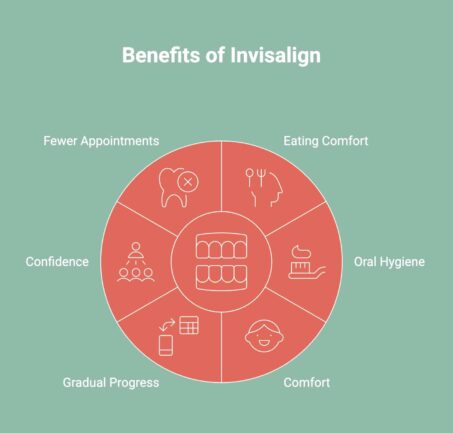
- Invisalign treatment allows you to continue eating normally without stressing over what might break or bend.
- Daily cleaning is simple and familiar, which helps maintain fresh breath and healthier gums throughout treatment.
- Aligners are smooth and gentle, reducing the mouth sores, cuts, and irritation often caused by metal wires and brackets.
- Progress feels more comfortable week to week, as aligners change gradually instead of sudden tightening adjustments.
- Aligners let you participate confidently in important moments such as job interviews, presentations, school pictures, and social events.
- Fewer unexpected appointments are needed because there are no emergencies from broken brackets or loose wires.
Overall, most patients fall somewhere in the middle range, but your exact investment depends on your individual goals and treatment needs, making a consultation the best way to receive an accurate estimate.
What Is the Typical Cost of Invisalign in Houston, and What Affects It?
If you are considering Invisalign, one of the biggest questions is how much people actually pay and whether Houston prices are higher or lower than other Texas cities. Because treatment needs vary from person to person, the cost is not the same for everyone, but knowing realistic averages can help you plan confidently.
Average Invisalign Cost in Houston
Here is what most patients report paying based on real treatment experiences and online community discussions.
- Many patients in Houston share that they typically pay between $4,500 and $6,500 for full Invisalign treatment.
- People with minor crowding or cosmetic adjustments often report spending around $3,000 to $4,500.
- Patients with more complex bite or alignment needs pay between $6,000 and $7,000, depending on how many aligners are required.
- These amounts often include checkups and aligner refinements, although retainers may be additional, depending on the clinic.
Comparing locations is helpful, but choosing a skilled provider who delivers predictable results and strong support throughout treatment typically matters more than saving a few hundred dollars upfront.
How Much Does Invisalign Cost in Houston vs Other Texas Cities?
Understanding how prices differ across the state can help with expectations.
- Invisalign tends to cost slightly more in major cities such as Houston, Dallas, and Austin because offices have higher operational and technology expenses.
- Smaller Texas areas and suburban towns often have lower starting prices, especially for mild treatment plans.
- However, many Houston offices remain competitive with flexible payment plans, bundled pricing, and seasonal specials that reduce overall cost.
- The difference is often modest, and value comes from provider expertise, technology, and support, rather than price alone.
Comparing locations is helpful, but choosing a skilled provider who delivers predictable results and strong support throughout treatment typically matters more than saving a few hundred dollars upfront.
What Affects the Average Cost of Invisalign in Houston?
These factors explain why two people may pay very different amounts.
- Treatment complexity determines how many aligners are needed and how long treatment takes.
- Additional refinements, attachments, or scans may increase the price based on your goals.
- Dental insurance may cover part of the treatment, significantly lowering out-of-pocket costs.
- Monthly financing options help make treatment affordable without paying everything up front.
Understanding these pricing influences helps you plan realistically and avoid surprises, and reviewing a customized treatment quote is the most accurate way to learn what Invisalign will cost for your unique smile.
What Payment Options Are Available for Invisalign in Houston, Texas?
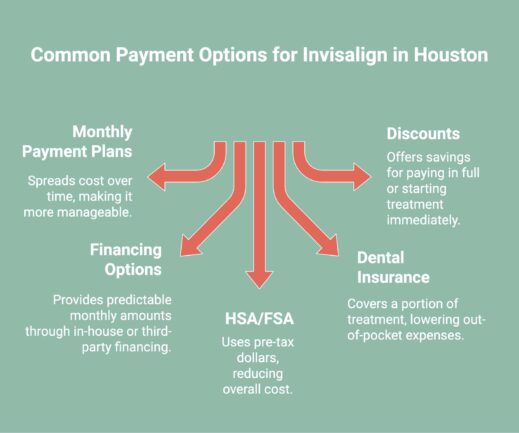
The cost of Invisalign can feel intimidating at first, but most dental offices in Houston make treatment much more affordable through flexible financial options.
Common payment options for Invisalign in Houston
Here are the most common ways patients manage the cost of treatment.
- Many practices offer monthly payment plans so you can spread out the cost instead of paying everything at once.
- In-house financing or third-party financing partners are often available to help break payments into predictable monthly amounts.
- Patients frequently use Health Savings Accounts (HSA) or Flexible Spending Accounts (FSA) to pay for Invisalign with pre-tax dollars, which reduces the overall cost.
- Dental insurance plans in Houston may cover a portion of Invisalign treatment if orthodontic benefits are included, lowering out-of-pocket expenses.
- Some offices offer discounts for paying in full or for starting treatment immediately during promotions.
These options make it possible to begin treatment when you are ready rather than waiting until you can save the full cost. With flexible payments, insurance support, and tax-free funding options, many patients find Invisalign more affordable than expected.
For a broad overview of clear-aligner benefits and the treatment process, read Affordable Invisalign in Houston.
Who Should Consider Invisalign for a Perfect Smile?
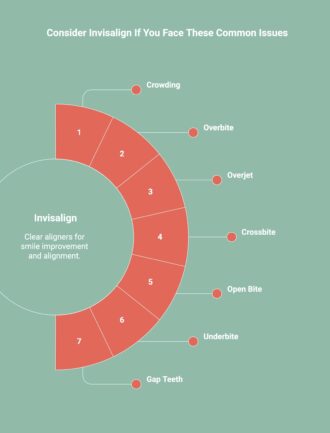
If you are thinking about improving your smile but are not sure whether you qualify for Invisalign, it can be confusing to figure out if it is the right fit. Many people assume Invisalign only fixes small cosmetic issues, but it can actually treat a wide variety of alignment and bite concerns for both teens and adults. The right eligibility depends on your unique dental needs and how complex your case is, which is why a professional evaluation is the best way to know for sure.
Below are some of the most common concerns that Invisalign can often treat successfully.
1. Crowding
When teeth overlap because there is limited space in the jaw, brushing and flossing become difficult, and the appearance may suffer. Invisalign can gently create space and help align crowded teeth.
2. Overbite
An overbite occurs when the upper teeth extend significantly over the lower teeth, which can cause discomfort or tooth wear. Invisalign can often guide the teeth into a more balanced position.
3. Overjet
Overjet refers to front teeth that protrude outward. In many cases, Invisalign can shift these teeth back into better alignment for improved function and aesthetics.
4. Crossbite
A crossbite happens when some upper teeth sit inside lower teeth when biting down. Invisalign may reposition these teeth to create a healthier bite and reduce uneven wear.
5. Open Bite
An open bite prevents proper contact between front teeth and can affect eating and speech. Invisalign can help bring the teeth together for better function and appearance in many cases.
6. Underbite
An underbite occurs when the lower teeth extend beyond the upper teeth. Invisalign can help correct mild to moderate cases, although more severe cases may need additional support.
7. Gap Teeth
Spaces between teeth can impact confidence and trap food. Invisalign can gradually close unwanted gaps to create a more uniform smile.
A consultation with an Invisalign provider will evaluate your alignment needs, bite structure, and smile goals to determine whether Invisalign is the right choice for you. With expert guidance and a plan built around your lifestyle, you can begin your journey toward a straighter, healthier, and more confident smile.
What Should You Expect During the Invisalign Treatment?
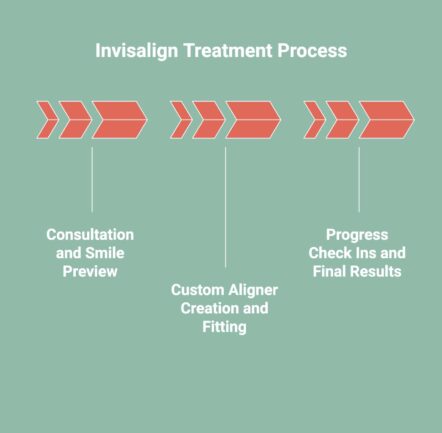
If you are considering Invisalign, you may be wondering what the process actually looks like from start to finish. Knowing what to expect helps reduce uncertainty and makes beginning treatment feel comfortable and exciting rather than overwhelming. Invisalign is designed to be a smooth, guided journey that gives you confidence every step of the way.
Step 1: Consultation and Smile Preview
During your first visit, your dentist performs a full exam and digital 3D scan to map your teeth and bite. You will discuss your goals, ask questions, and review a personalized treatment plan. Many patients find it reassuring to see a digital preview of their projected results, which helps visualize how their smile will improve before committing.
This appointment is also the time to talk about expected discomfort, daily wear expectations, lifestyle adjustments, and cost, so you leave feeling fully informed.
Step 2: Custom Aligner Creation and Fitting
Your digital scan is used to create a series of smooth, BPA-free aligners designed to move teeth gradually and comfortably. At the fitting appointment, your dentist shows you exactly how to insert and remove aligners, how to keep them clean, and what to expect during the first few days of adjustment.
Most people experience mild pressure or tightness when starting a new tray; this is normal and typically fades within a couple of days. You’ll wear your aligners for 20 to 22 hours per day and switch to a new set every one to two weeks to continue progressing.
Step 3: Progress Check-Ins and Final Results
You’ll return for quick check-in visits every 6 to 8 weeks so your dentist can monitor progress and give you your next set of aligners. These appointments are usually short and minimally disruptive to your schedule. Most treatments take about 12 to 18 months, depending on individual needs and consistency with wear time.
After your last aligner, you’ll receive custom retainers to maintain your results and protect your new smile long term.
Invisalign is a manageable and predictable process when you understand what to expect and have support from an experienced provider. If you’re ready to explore whether it’s the right fit for your smile and lifestyle, scheduling a consultation is the best next step toward feeling confident and prepared.
What Are the Differences Between Invisalign and Other Clear Aligners?
If you are comparing clear aligner options, it may be difficult to understand what truly sets Invisalign apart from cheaper or newer brands. While many aligners may look similar on the surface, the technology, materials, and precision behind Invisalign create a very different treatment experience and level of predictability.
Here are the key differences that make Invisalign stand out;
- Invisalign uses a proprietary SmartTrack material that provides more gentle and consistent pressure, which can create more accurate and predictable tooth movement.
- Advanced digital planning with ClinCheck software maps every shift in detail and allows treatment to be customized rather than a one-size-fits-all approach.
- Invisalign is designed to treat a wider range of orthodontic issues, including moderate and some complex bite concerns, not just minor cosmetic alignment.
- Dentist-guided monitoring ensures professional oversight throughout treatment rather than relying on self-directed progress.
- The aligners generally fit more comfortably due to precision trimming and customization based on your exact gum line.
- Invisalign has a long track record supported by years of research, clinical testing, and millions of successful treatment cases worldwide.
If you want to explore how cosmetic treatments, including Invisalign, can transform your smile and correct stains, gaps, and alignment concerns, read How Can Cosmetic Dentistry Fix Stains and Gaps in Your Teeth?
What Precautions Should You Take When Wearing Invisalign Aligners?
Wearing Invisalign is straightforward, but following a few important guidelines helps you stay on track and see the best results. These precautions play a huge role in keeping your aligners clear, protecting your oral health, and making sure your treatment time stays on schedule, especially if you are correcting more complex cases.
Here are the key precautions to keep in mind;
- Wear your aligners for the recommended 20 to 22 hours each day to avoid delays in your treatment time and maintain steady progress.
- Remove aligners before eating or drinking anything other than water to prevent staining or damage, which is different from traditional metal braces that stay in place.
- Brush and floss before putting aligners back in to avoid trapping food or bacteria, and to support quality care throughout treatment.
- Clean or rinse aligners daily to keep them fresh, clear, and free from buildup.
- Use the protective storage case whenever aligners are not in your mouth so they do not get lost or damaged.
- Keep aligners away from heat, including hot drinks or hot water, since this can warp them and affect fit.
Follow your planned aligner change schedule and attend regular check-in visits, which are especially important for complex cases that require detailed monitoring.
Looking for a Trusted Invisalign Provider in Houston Who Truly Understands Your Smile Goals?
Starting orthodontic treatment can feel overwhelming when you are unsure who to trust or worried about choosing the wrong provider. Many people fear discomfort, unclear pricing, or feeling rushed through treatment instead of receiving the personal attention they deserve. Your smile is important, and you should feel supported, informed, and confident every step of the way.
At Dentist Tree of the Heights, we focus on delivering quality care with a friendly, patient-centred approach that makes your Invisalign journey smooth, comfortable, and predictable. Whether you need simple alignment improvements or complex cases that require detailed planning, our experienced team uses advanced digital technology and personalized treatment guidance to help you achieve results you will love.
Schedule your consultation at Dentist Tree of the Heights today and take the first step toward a confident new smile.
Conclusion
Understanding the cost of Invisalign in Houston is essential for anyone considering this effective teeth alignment solution. With its numerous benefits over traditional braces, Invisalign offers a discreet and comfortable way to achieve your dream smile. By knowing the average price range and what to expect during treatment, you can make an informed decision that suits your budget and needs.
Frequently Asked Questions
Is Invisalign more expensive than traditional braces in Houston?
In Houston, the cost of Invisalign treatment is often similar to traditional braces, although pricing varies with case complexity. The good news is that many patients value comfort, appearance, and convenience when comparing both options and choosing confidently.
How do I find affordable Invisalign providers in Houston?
To find affordable Invisalign providers in Houston, ask about flexible financing options, payment plans, and membership savings. Request insurance benefit checks and compare treatment options to see which approach fits your needs, lifestyle, and budget comfortably.
What does my quoted Invisalign cost include?
Your Invisalign quote should include digital scans, customized aligners, and routine visits, plus clarity about additional costs. Ask whether retainers or refinement trays are extra, ensuring the total cost is understood before committing to treatment for your plan.
Do dental insurance plans in Houston typically cover Invisalign treatment?
Many dental insurance plans in Houston offer partial Invisalign coverage for orthodontic care when orthodontic benefits apply. Checking directly with your insurance provider helps determine expected savings and estimated out-of-pocket expenses before scheduling treatment confidently for your situation.
What is included in the Invisalign cost quoted by Houston dentists?
Most Houston dentists include consultations, digital imaging, aligner sets, and progress visits within pricing, explaining key factors clearly so patients understand expectations. Transparent discussions help you compare value, review payment arrangements, and avoid confusion throughout your Invisalign experience.
What factors influence the cost of Invisalign in Houston?
The key factors influencing Invisalign cost involve complexity, treatment length, and required aligners. Shorter treatments typically cost less, while longer plans increase expenses. Insurance support and payment plans help make investing in your smile achievable without overwhelming finances.
What is the average cost of adult Invisalign orthodontia in Houston?
The average cost of adult Invisalign orthodontia in Houston typically ranges from 4,500 to 7,000 dollars, depending on treatment complexity, aligner quantity, and appointment needs, with payment plans and insurance coverage helping reduce out-of-pocket expenses.