

Key Highlights
- A severe toothache accompanied by swelling, fever, or trouble breathing is a dental emergency requiring immediate attention.
- The emergency room (ER) provides emergency care for severe symptoms, offering pain relief and antibiotics for issues like a dental abscess.
- ERs are not equipped for dental procedures like fillings or extractions; they manage the crisis, but don’t fix the underlying tooth problem.
- For tooth pain relief from a knocked-out or badly broken tooth, you need to see a dentist or visit the ER as quickly as possible.
- You should always follow up with a dentist after an ER visit to address the root cause of your dental issue.
That sharp, throbbing tooth pain hits out of nowhere, you can’t eat, can’t sleep, and the pain only seems to get worse. It’s late, your dentist is closed, and panic sets in. “Should I go to the ER for this toothache?”
You’re not alone; thousands face this same moment of confusion and desperation every day. The truth is, some toothaches need urgent medical attention, while others are best treated by a dentist.
This blog breaks down the difference so you know exactly where to go, how to get relief fast, and what steps to take next.
When Is a Toothache a True Dental Emergency?
A toothache isn’t just inconvenient; it’s your body’s way of signaling that something’s wrong. While minor tooth pain can often wait for a regular dental visit, severe or sudden pain may point to infection, nerve damage, or trauma that needs urgent attention.
A dental emergency is any condition that causes uncontrolled pain, swelling, or bleeding, or threatens your overall health. Acting quickly can prevent complications like abscesses, bone infections, or even systemic illness.
What are the Common Dental Emergencies That Require Urgent Care?
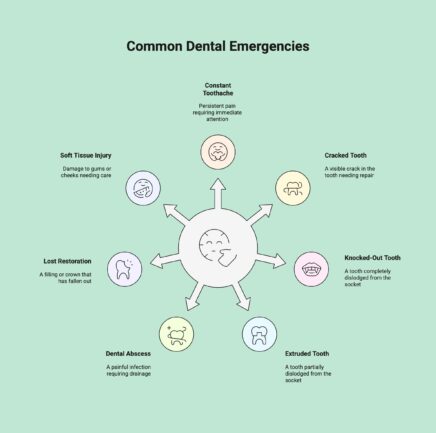
Below are some of the most common dental emergencies and what to do before reaching a dentist or the ER.
1. Emergency Room for Severe Toothache
A constant, throbbing toothache usually means a deep cavity, nerve exposure, or infection. Over-the-counter painkillers might not help.
Delaying care can worsen the infection or cause an abscess. The ER can provide stronger pain relief and antibiotics to control infection and prevent it from spreading until you see your dentist.
2. Badly Cracked Tooth
A cracked or broken tooth can expose the inner pulp, causing sharp pain and an increased risk of infection.
Rinse with warm water, apply gauze if bleeding, and use a cold compress for swelling. Then, see your dentist immediately, as delaying care can lead to permanent tooth loss.
3. Knocked-Out Tooth
A knocked-out tooth is a race against time; you have about one hour to save it.
Hold it by the crown, rinse gently, and try to reinsert it in its socket. If that’s not possible, store it in milk or saline and head to a dentist or ER immediately. Acting fast improves your chances of saving it.
4. Extruded (Partially Dislodged) Tooth
If a tooth looks longer or feels loose, it’s partially out of its socket. Don’t push it back.
Apply a cold compress and take a painkiller for the pain. A dentist will reposition and stabilize the tooth. Quick action is key to saving it.
5. Dental Abscess
A dental abscess is a pus-filled infection around a tooth or gum. Symptoms include severe pain, swelling, fever, and a bad taste in your mouth.
Rinse with warm salt water to reduce discomfort, but don’t wait; abscesses can become life-threatening if untreated. Go to the ER or dentist immediately if you notice swelling or fever.
6. Lost or Broken Dental Restoration
A lost filling or crown exposes the tooth to sensitivity and damage.
Temporarily cover the area with sugarless gum or dental cement. If you still have the crown, you can place it back with dental cement or toothpaste (never super glue). Then, see your dentist for a permanent fix.
7. Severe Soft Tissue Injury
Cuts to your tongue, lips, gums, or cheeks can bleed heavily. Rinse with salt water, apply pressure using gauze or a tea bag for 15–20 minutes, and use a cold compress for swelling.
If bleeding continues after 20 minutes, go to the ER or your dentist. You may need stitches or antibiotics to prevent infection.
How Can I Manage My Symptoms Until I See My Dentist?
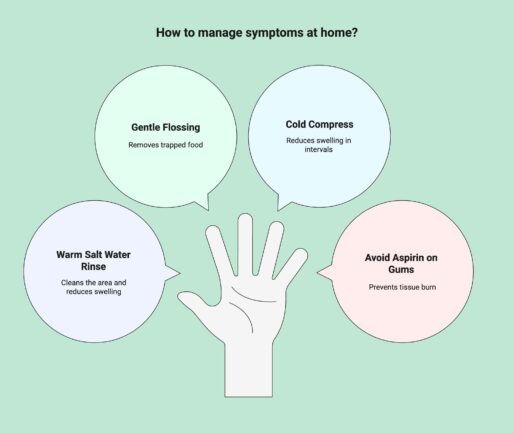
If you can’t get dental care right away, here’s how to ease discomfort safely at home:
- Rinse with warm salt water to clean the area and reduce swelling.
- Floss gently to remove trapped food.
- Use a cold compress for 15-minute intervals.
- Avoid placing aspirin directly on your gums; it can burn the tissue.
These steps won’t solve the issue, but they’ll help you stay comfortable until you get professional treatment.
When Should You Call Your Dentist Instead?
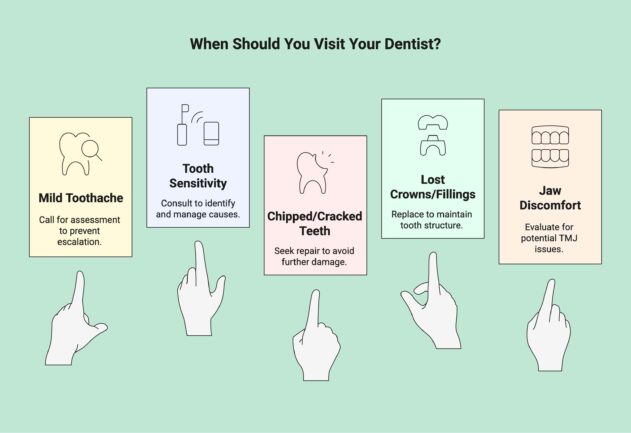
Not every toothache or dental issue requires a trip to the emergency room. In fact, most dental concerns can (and should) be handled directly by your dentist, where you’ll receive a more accurate diagnosis and proper treatment, not just temporary relief.
Knowing when to wait for a dental appointment versus when to seek emergency care can help you avoid unnecessary stress and expenses.
Here are situations where it’s best to call your dentist first:
1. Mild to Moderate Toothache
If your toothache is annoying but tolerable and improves with over-the-counter pain medication, you likely don’t need urgent care. It may be caused by:
- A developing cavity
- Gum irritation
- Food stuck between teeth
Your dentist can assess the cause, take X-rays, and provide the necessary treatment, such as a filling or deep cleaning.
2. Tooth Sensitivity (Hot, Cold, or Sweet)
Sensitivity isn’t always a sign of an emergency. It may be due to:
- Enamel erosion
- Receding gums
- A small cavity or worn filling
While not urgent, it’s important to schedule a visit to prevent the issue from worsening.
3. Chipped, Cracked, or Broken Teeth (Without Severe Pain)
If the tooth is broken but you’re not bleeding heavily or in severe pain, you can usually wait a day or two to be seen.
In the meantime:
- Rinse with warm water
- Avoid chewing on that side
- Cover any sharp edges with dental wax (available at most drugstores)
Still, don’t ignore it; untreated cracks can lead to infection or nerve exposure later.
4. Lost Crowns or Fillings
A lost filling or crown can cause discomfort or sensitivity, but doesn’t always require immediate emergency care. However, it should be replaced promptly to avoid further damage.
Temporary tip: You can use over-the-counter dental cement or sugar-free gum to cover the exposed tooth until you’re seen.
5. Jaw Discomfort Without Swelling or Fever
Mild jaw pain could be due to:
- TMJ disorder
- Teeth grinding (bruxism)
- Recent dental work
As long as there’s no swelling, fever, or difficulty opening your mouth, it’s safe to wait and book a regular appointment.
What the ER Can (and Can’t) Do for Tooth Pain?
When you’re in severe dental pain, especially outside of regular office hours, heading to the ER might feel like the safest choice. However, it’s essential to understand what the emergency room is equipped to handle in terms of tooth pain and when it’s better to wait for a dentist.
What the ER Can Do for Tooth Pain?
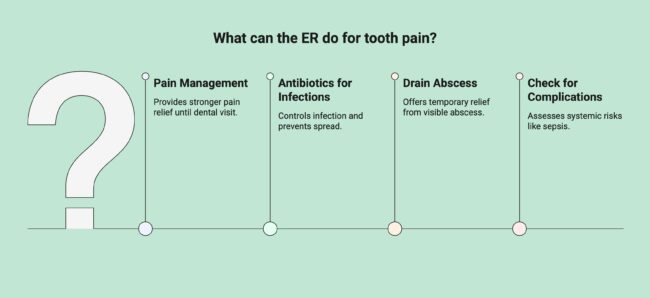
The ER’s job is to address immediate health risks, especially those involving pain, infection, or swelling that could become life-threatening. While they can’t fix dental problems, they can stabilize your condition and help manage the symptoms.
1. Pain Management
If your toothache is unbearable, ER doctors can prescribe stronger pain relief than what is available over the counter. This includes opioid-based medications or anti-inflammatory drugs to help you manage discomfort until you can visit a dentist.
2. Prescribe Antibiotics for Infections
If your tooth pain is due to an infection (such as a dental abscess), and you’re showing signs like facial swelling or fever, the ER can prescribe antibiotics. This helps control the infection and prevents it from spreading to the jaw, neck, or bloodstream.
3. Drain a Visible Abscess
In some cases, if the dental abscess is clearly visible and causing significant swelling, ER staff may attempt to drain it. This provides temporary relief and reduces the risk of the infection spreading further. However, this is only a short-term solution.
4. Check for Systemic Complications
If you have symptoms like difficulty breathing, high fever, or swelling that’s spreading, the ER can assess whether the infection has become dangerous. They’ll check for conditions like sepsis, which is a severe infection in the bloodstream, or airway obstruction that may require immediate intervention.
What the ER Can’t Do for Tooth Pain?
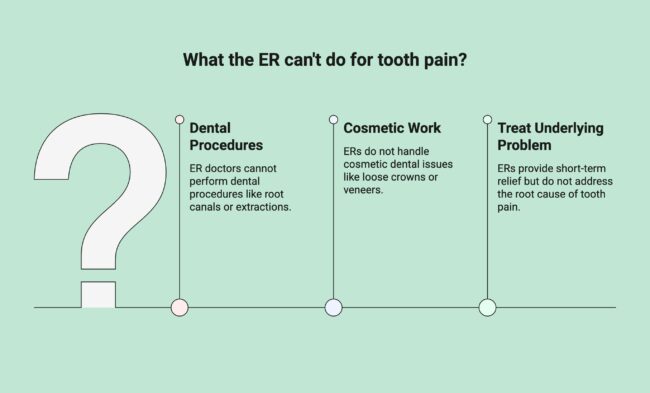
Although the ER is crucial in handling urgent medical concerns, it’s not a replacement for professional dental care. There are several limitations to what emergency rooms can provide in terms of dental care.
1. Perform Dental Procedures
ER doctors are not dentists. They cannot perform root canals, fillings, extractions, or crown repairs. These procedures require specialized dental tools and expertise, which are only available at a dental clinic.
2. Provide Cleanings or Cosmetic Work
If your tooth pain is related to cosmetic concerns or general maintenance, such as a loose crown or a dislodged veneer, the ER cannot help. A dental professional must do cleanings, whitening, or cosmetic repairs.
3. Treat the Underlying Problem
The ER’s goal is short-term relief, not long-term solutions. While they can reduce pain or swelling temporarily, the source of the problem, like tooth decay or a cracked tooth, will remain untreated until you see a dentist.
What Happens at the ER for a Tooth Emergency?
Experiencing severe dental pain can be overwhelming, especially if it strikes outside your dentist’s office hours. When you’re unsure where to turn, you might ask yourself, “Can I go to the emergency room for a toothache?” The short answer: yes, but only under certain conditions.
Let’s break down exactly what happens if you visit the emergency room for a toothache, and how the ER helps stabilize your condition before you follow up with your dentist.
Step-by-Step: What to Expect at the Emergency Room for Tooth Pain
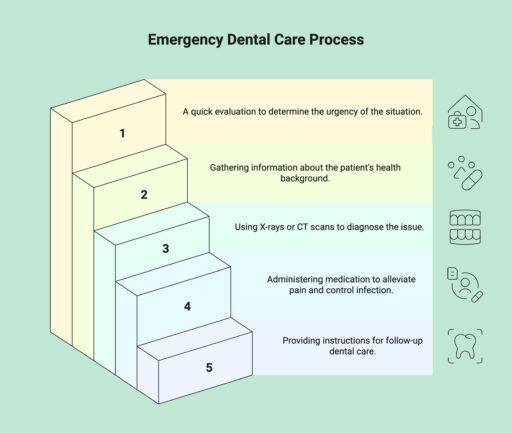
When you arrive at the ER with a dental emergency, the medical team will aim to rule out any serious complications and provide immediate relief. Here’s how a typical visit unfolds:
1. Initial Medical Assessment
After checking you in, a nurse or physician will perform a brief physical exam of your mouth, face, and jaw. They’ll look for signs of swelling, pus drainage, facial asymmetry, or other red flags that suggest a spreading infection or abscess.
They’ll also take your vital signs (blood pressure, temperature, heart rate) to determine if the issue is affecting your overall health. A fever, for example, can indicate a serious infection that needs urgent attention.
2. Medical History and Symptom Review
The ER doctor will ask questions about your symptoms, how long you’ve been in pain, what triggers it, whether you’ve taken any medication, and if you’ve had dental issues in the past. This helps them narrow down whether the pain stems from a localized issue (like a cracked tooth) or something more systemic.
This step is crucial because many people arrive at the ER wondering, “Can the emergency room help with tooth pain that doesn’t go away with painkillers?”
3. Imaging (X-rays or CT Scan)
If there’s concern about the infection spreading beyond your tooth, particularly to your jaw, sinuses, or neck, the ER team may order imaging such as a dental X-ray or a CT scan. These help detect deep infections, abscesses, or bone involvement that can’t be seen with the naked eye.
This is especially important in cases where people ask, “Can the emergency room treat toothaches that cause swelling or facial pain?” These tools help answer that question quickly and accurately.
4. Pain and Infection Management
Once the issue is diagnosed, you’ll receive prescription pain medication and antibiotics to relieve pain and begin fighting any infection. For many, this is the reason they came in the first place, and it’s where the ER plays a vital role.
So if you’re wondering, “Can the emergency room do anything for tooth pain?”, yes, they can control your pain and stop infections from getting worse.
In some cases, if a dental abscess is visibly swollen or close to rupturing, the doctor may drain it to relieve pressure and discomfort.
5. Discharge and Dental Referral
Finally, the ER team will provide discharge instructions and often refer you to a local dentist or oral surgeon. This is a key moment to understand that emergency rooms are not designed for permanent dental fixes; they offer stabilization, not solutions.
If you’ve been wondering, “Can the emergency room treat toothaches completely?”, the answer is no. While they can help manage pain and infection, they do not perform root canals, fillings, or extractions.
The Role of the ER vs. Your Dentist
To be clear, the ER is not a substitute for a dentist. But if you’re in severe pain and wondering, “Can I go to the emergency room for tooth pain that’s unbearable?”, yes, you can and should if:
- The pain is sudden and intense
- You have swelling in your face or jaw
- You have a fever
- You’re having trouble swallowing or breathing
For everything else, call your dentist, they are best equipped to handle the underlying cause of your pain and offer long-term solutions.
Why Choose Dentist Tree of the Heights for Emergency Dental Care?
At Dentist Tree of the Heights, we’re known as the best dentist in Houston, TX, for a reason. Our full-service dental team is ready to handle everything, from emergency dental care for severe toothaches, cavities, or broken teeth to long-term smile restoration with dental implants and orthodontics.
Whether you need urgent pain relief, want to replace missing teeth, or are ready to perfect your smile with braces or Invisalign, our expert team is here to help you put your best smile forward, comfortably and confidently.
If you’re in pain or need dental care you can trust, call Dentist Tree of the Heights today and get your smile back on track in no time.
Conclusion
Tooth pain can range from annoying to unbearable, but knowing when to visit the ER and when to call your dentist makes all the difference.
The ER can control severe pain and stop infections from spreading, but only your dentist can fix the root cause. Watch for red flags like swelling, fever, or persistent bleeding, and act quickly when they appear.
If you’re unsure or can’t reach your dentist, go to the ER to stay safe. Once stabilized, book a dental appointment right away for lasting relief.
Frequently Asked Questions
Is it safe to take a child to the ER for emergency tooth pain?
Yes, it is safe and necessary to take a child to the ER for a dental emergency if they have severe dental pain accompanied by a high fever, facial swelling, or difficulty breathing or swallowing. While the ER provides emergency care, you must follow up with a pediatric dentist afterward.
Are there alternatives if I can’t reach a dentist or the ER right away?
If you can’t get immediate dental care, you can use home remedies for temporary tooth pain relief. Rinsing with warm salt water, applying a cold compress, and taking over-the-counter pain relievers can help manage dental pain until you can see a professional.
Will insurance cover an ER visit for a toothache?
It depends on your plan. Medical insurance may cover ER visits for severe infection or trauma, but routine toothaches typically require dental insurance for coverage.
What are the risks of waiting to see a dentist instead of going to the ER for severe tooth pain?
Waiting to treat severe dental pain risks allowing a bacterial infection, like a dental abscess, to spread. The infection could enter your bloodstream, causing widespread inflammation and a much more serious systemic health issue. This is why severe symptoms require immediate attention.
Are there any signs that a toothache is life-threatening and needs emergency care?
Yes, a dental emergency can be life-threatening. Seek immediate attention if your toothache is accompanied by significant swelling that makes it hard to breathe or swallow, a high fever, or confusion. These are signs that an infection from an abscessed tooth may be spreading.
Is there an emergency room for tooth pain near me?
You can search online for an emergency room for tooth pain near me to find local hospitals or urgent care centers open 24/7. Many hospitals have emergency dental services or can refer you to a nearby dentist on call.