

Key Highlights
- Preventive dentistry services focus on maintaining good oral hygiene to avoid future problems.
- Key services include regular dental visits, professional dental cleanings, fluoride treatments, and dental sealants.
- Practising good habits at home, like daily brushing and flossing, is essential for preventing tooth decay and gum disease.
- Preventive care helps reduce your risk for cavities, gingivitis, and even systemic health issues.
- Most dental insurance coverage prioritises preventive care, often covering services at 100%.
- Consistent preventive efforts lead to a healthier smile and can save you money on costly procedures.
Worried about developing cavities, gum problems, or sensitivity in your teeth?
You’re not alone. Many people delay check-ups until discomfort appears, but by then, issues often require more complicated (and expensive) treatments that could have been prevented earlier.
Preventive dentistry helps prevent exactly this. It’s about staying ahead of problems with simple daily habits and regular professional care, so you can protect your teeth, avoid discomfort, and save money in the long run.
In this guide, we’ll walk you through the preventive services and at-home steps that keep your smile strong, healthy, and stress-free for years to come.
What Is Preventive Dentistry and Why Does It Matter?
Preventive dentistry is all about caring for your teeth before problems start. It focuses on keeping your mouth healthy with daily habits and professional dental services that protect against cavities, gum disease, enamel wear, and other issues.
The ultimate goal is simple: maintain your natural teeth for a lifetime while protecting your overall well-being. Preventive dentistry doesn’t just keep your smile bright; it helps you avoid discomfort, complex treatments, and big dental bills.
Regular check-ups and cleanings allow dentists to spot potential problems early. Services like oral exams, fluoride treatments, and dental sealants are designed to keep your teeth strong and healthy long before you ever need restorative work.
What Are the Benefits of Preventative Dental Treatment?
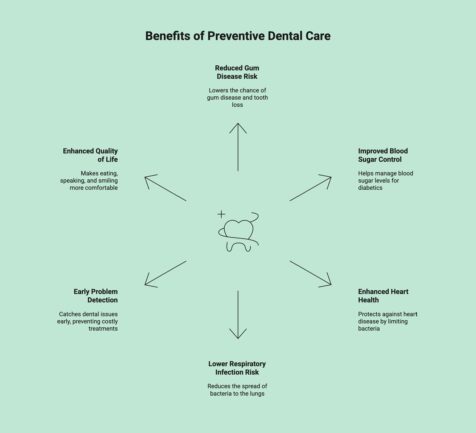
Most people don’t think about their teeth until something hurts, and by then, it’s often too late. Preventive dentistry helps you avoid that stress, protect your health, and save money down the line. Here’s how it helps.
- Preventive care lowers the risk of gum disease, which can otherwise progress to tooth loss if left untreated.
- By maintaining healthy gums, it becomes easier to control blood sugar levels, reducing complications for people with diabetes.
- Strong oral hygiene helps protect heart health by limiting harmful bacteria from entering the bloodstream.
- Keeping your mouth clean also lowers the chances of respiratory infections caused by bacteria spreading to the lungs.
- Regular dental visits and cleanings significantly reduce the risk of cavities, gum disease, and tooth decay.
- Dentists can catch problems early, like small cavities or signs of gum disease, before they require costly or invasive treatment.
- A healthy mouth supports overall well-being, as poor oral health has been linked to systemic conditions such as heart disease and diabetes.
- Finally, good oral health enhances quality of life, making eating, speaking, and smiling more comfortable and enjoyable.
What’s the Difference Between Cosmetic and Preventive Dentistry?
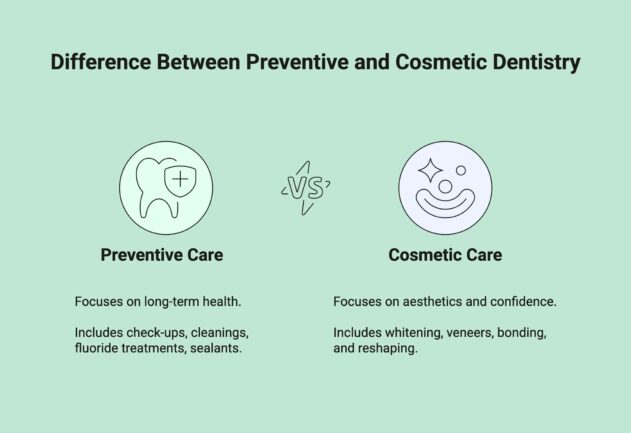
Let’s understand the difference between cosmetic and preventive dentistry, as they are closely connected but not the same.
Preventive Dentistry
Preventive dentistry is all about stopping problems before they start. Its goal is to protect your teeth and gums through regular check-ups, cleanings, fluoride treatments, sealants, and good daily habits.
Focusing on early detection and maintenance helps you avoid cavities, gum disease, and expensive treatments later. Preventive care is best for anyone who wants to keep their natural teeth strong, healthy, and problem-free for life.
Cosmetic Dentistry
Cosmetic dentistry focuses on improving the look of your smile. Its purpose is to enhance the colour, shape, and overall appearance of your teeth through treatments like whitening, veneers, bonding, and reshaping.
While mostly elective, cosmetic dentistry can make a big difference in confidence and comfort, helping you feel proud to smile while also supporting a balanced, natural appearance.
How Do Routine Exams and Professional Cleanings Help?
It is highly recommended to visit your dentist once or twice a year, depending on your needs. During an exam, your dentist checks for:
Symptoms of Gum Disease
Bleeding when you brush, swollen gums, or bad breath might not seem like a big deal, but they can be early signs of gum disease.
If ignored, gum infections can damage the bone that holds your teeth in place and even raise risks for heart disease or diabetes.
The good news? Caught early, it’s easy to treat with simple cleanings and better home care. The sooner you act, the easier it is to fix.
Abnormal Tooth Wear
If your teeth look shorter, uneven, or feel extra sensitive, you might be grinding or clenching without realising it.
Over time, this kind of wear can cause cracks, enamel loss, and jaw pain.
Early detection lets your dentist step in with small fixes, like a custom night guard, before things get painful or expensive.
Oral Cancer Warning Signs
A sore that doesn’t heal, a patch that looks different, or a lump that feels unusual, these could be early signs of oral cancer.
They’re often painless, which is why regular dental check-ups are so important. Your dentist checks for these signs at every visit, and catching them early can make all the difference.
Your dentist does more than keep your smile clean; they help spot the small things before they turn into big problems. Regular check-ups protect your health, save you money, and keep your smile strong.
What Are The Three Key Preventive Dental Treatments?
Preventive dentistry goes far beyond your daily brushing and flossing routine. These professional preventive services, dental cleanings, fluoride treatments, and dental sealants work together to keep cavities, gum disease, and enamel damage at bay.
Let’s break down what each treatment does and why your dentist might recommend it.
1. Dental Cleaning
A professional cleaning removes plaque and tartar buildup that regular brushing and flossing can’t reach. It’s the foundation of preventive care and keeps your gums healthy.
A hygienist uses specialised tools to gently scale away hardened deposits, polish the teeth for a smooth finish, and sometimes apply fluoride for extra protection.
Who It’s For: Everyone, adults, teens, and children. Even if you take great care of your teeth at home, cleanings reach the areas your toothbrush can’t.
How Often It’s Done: Usually, every six months, though your dentist may recommend more frequent cleanings if you’re prone to plaque buildup or gum issues.
How Long It Takes: About 30 to 60 minutes, depending on how much buildup needs to be removed.
2. Fluoride Treatment
Fluoride treatments use a concentrated form of fluoride to strengthen tooth enamel and make it more resistant to decay.
A dentist or hygienist applies fluoride as a gel, foam, or varnish directly to your teeth using a brush, tray, or mouth rinse. It’s quick, painless, and safe.
Who It’s For: Recommended for children, teens, and adults who are at higher risk for cavities, including those with weak enamel, frequent snacking habits, or dry mouth.
How Often It’s Done: Typically every 3, 6, or 12 months, depending on your risk of decay and your dentist’s recommendation.
How Long It Takes: Just a few minutes, you can usually eat or drink shortly afterwards if varnish is used.
3. Dental Sealants
Dental sealants are thin, protective coatings applied to the chewing surfaces of molars and premolars to block bacteria and food from settling into tiny grooves.
Your dentist cleans and dries the tooth, applies a bonding solution, then paints on the sealant before hardening it with a special curing light.
Who It’s For: Mostly children and teens, since their newly erupted molars are most prone to cavities, but adults with deep grooves or a history of decay can benefit too.
How Often It’s Done: Sealants can last 5 to 10 years with proper care, though they’re checked and touched up during regular dental visits.
How Long It Takes: Usually 10 to 15 minutes per tooth, depending on how many teeth are being sealed.
Comparison of Common Preventive Dental Treatments
Below is a detailed comparison of the three most common preventive treatments:
- Dental Cleaning: Removes plaque and tartar buildup while polishing teeth. Recommended for everyone, including children, teens, and adults, every 6 months. Takes about 30 to 60 minutes and helps maintain healthy gums, fresher breath, and early detection of dental issues.
- Fluoride Treatment: Strengthens enamel and helps prevent tooth decay. Ideal for children, teens, and high-risk adults. Usually done every 3 to 12 months and takes 5 to 10 minutes. Results in stronger, more decay-resistant teeth.
- Dental Sealants: Create a protective barrier on molars to prevent cavities. Best for children, teens, and some adults with deep grooves in their teeth. Applied every 5 to 10 years and takes 10 to 15 minutes per tooth. Provides long-term cavity protection for chewing surfaces.
How Do Everyday Habits and Choices Protect Your Dental Health?
Strong oral health starts with small, consistent habits. What you do at home has the biggest impact on how often you need to see your dentist and how healthy your smile stays over time.
Daily Oral Hygiene That Actually Works
Brushing twice a day with fluoride toothpaste for at least two minutes helps remove plaque and strengthen enamel, while flossing once daily cleans where brushes can’t reach.
Replacing your toothbrush every three to four months ensures you’re not spreading old bacteria, and brushing your tongue keeps bad breath at bay.
These simple steps prevent plaque buildup and gum inflammation, the early signs of gum disease.
Why Nutrition and Lifestyle Choices Matter
Your diet and habits directly affect your teeth. A diet rich in fruits, vegetables, lean proteins, and dairy strengthens enamel and supports gum health, while sugary foods and acidic drinks fuel the bacteria that cause decay.
Water helps wash away acids and food particles, keeping your mouth naturally clean.
Lifestyle habits also play a big role. Smoking or chewing tobacco increases the risk of gum disease, tooth loss, and oral cancer.
Limiting alcohol and staying hydrated helps, too, because a dry mouth makes bacteria thrive. In short, what’s good for your body is usually great for your smile.
Why Is Preventive Dentistry Worth the Investment?
Preventive care isn’t just about avoiding pain; it’s about saving time, stress, and money. Routine cleanings and exams cost far less than repairing damage later.
A small cavity treated early with a $100 filling can save you from needing a $1,200 crown down the road. Sealants and fluoride treatments are inexpensive and prevent decay in hard-to-clean areas, especially for kids and teens.
During routine check-ups, your dentist looks for more than cavities; they screen for gum disease, abnormal wear, and oral cancer.
Early signs like sores, lumps, or patches can be painless, so regular exams help catch them before they become serious. These screenings only take minutes but can be life-saving.
How Can You Make the Most of Your Preventive Dental Coverage?
Most insurance plans are designed to reward prevention. Cleanings, check-ups, and X-rays are often covered at 100%, meaning you can stay on top of your oral health without large out-of-pocket costs.
To get the most out of your coverage, review your plan each year, schedule both of your covered cleanings, and ask if treatments like fluoride or sealants are included.
Using your benefits for preventive visits not only helps you avoid expensive dental work later, but it also ensures you’re getting the full value of your insurance.
Why Trust Dentist Tree of the Heights With Your Smile?
At Dentist Tree of the Heights, we know a healthy smile is more than just teeth; it’s confidence, comfort, and peace of mind. That’s why our team combines gentle, compassionate care with advanced technology to make every visit smooth and stress-free.
Whether you need routine cleanings, urgent emergency care, implants to restore missing teeth, or cosmetic dentistry to perfect your smile, you’ll find it all under one roof.
We pride ourselves on affordable treatment options and personalised care, so you never feel like just another patient. Here, your smile gets the attention it truly deserves.
Connect with us today to book your appointment and experience dentistry made easy, comfortable, and affordable.
Conclusion
Preventive dentistry is your best investment in a healthier, brighter smile and in your overall well-being. Simple steps like regular check-ups, cleanings, and treatments such as fluoride or sealants can save you from bigger, costlier problems later.
Think of it as giving your future self the gift of fewer worries and more reasons to smile.
Frequently Asked Questions
What is primary secondary and tertiary prevention in dentistry?
Primary prevents issues with cleanings, secondary fixes early decay, tertiary restores damage like crowns, together ensuring oral health at every stage before problems worsen.
What is the link between oral health and preventive dentistry?
Preventive dentistry protects oral health by stopping cavities, gum disease, and infections before they start, linking daily hygiene and professional care to healthier teeth, gums, and overall well-being.
What is preventive dentistry for kids?
Preventive dentistry for kids builds healthy habits early through check-ups, fluoride treatments, and sealants. For example, applying sealants on molars or using fluoride varnish helps prevent cavities while teaching proper brushing and diet choices.
How does preventive dental care differ from restorative procedures?
Preventive dental care focuses on proactive measures like cleanings and exams to stop dental problems before they start. In contrast, restorative procedures, such as fillings or root canals, are reactive treatments designed to fix oral health issues like decay or damage that have already occurred.
Are there any disadvantages of preventative dental care?
The main drawback is cost and time commitment for regular visits, but these are minimal compared to the higher expenses, pain, and stress of treating advanced dental problems later.
Does my insurance cover routine preventive dentistry?
Most dental insurance plans provide excellent dental coverage for routine preventive dentistry. Services like regular dental cleanings and exams are often covered at 100%. However, you should always check your specific policy to understand the full details of your benefits for preventive dental visits.
How important is preventive dental care for teens?
Preventive dental care for teens is crucial as permanent teeth come in. Sealants, fluoride, and routine cleanings help protect teeth during these formative years, lowering the risk of cavities and gum problems.