

Key Highlights
- Root canal–treated teeth are weaker and more prone to cracks due to lost inner structure, missing crowns, daily habits, and age.
- A broken root canal tooth becomes an emergency if you have severe pain, deep cracks, swelling, or a loose tooth.
- Delaying treatment can cause reinfection, crown failure, fractures below the gumline, and eventual tooth loss.
- Dentists treat broken root canal teeth with crown replacement, post-and-core buildup, retreatment, or extraction with replacement.
- Preventive care includes getting a crown, avoiding hard foods, using a night guard, regular check-ups, and good oral hygiene.
- Small chips may wait, but painful, sharp, or large fractures require emergency chipped tooth repair.
- Dentist Tree offers specialized emergency care, advanced restorations, and trusted local service to save your smile.
Few things are as unsettling as feeling a tooth that already had a root canal suddenly crack or break. After going through the procedure to save your tooth, the last thing you expect is to face new dental issues with it. The question most patients ask in this moment is simple: Is this an emergency?
Root canal–treated teeth are often more fragile than natural teeth because they’ve lost much of their inner structure during treatment. If a crown or filling fails, or if you bite down on something hard, the tooth can fracture, sometimes leaving sharp edges on the affected area or even exposing the tooth’s pulp chamber.
In this blog, we’ll break down the common causes of fractures, when a broken tooth is considered a dental emergency, what happens if you delay care, and the dental services available. You’ll also learn preventive steps to protect your restored tooth and maintain strong dental health.
Why Do Root Canal Teeth Break Easily?
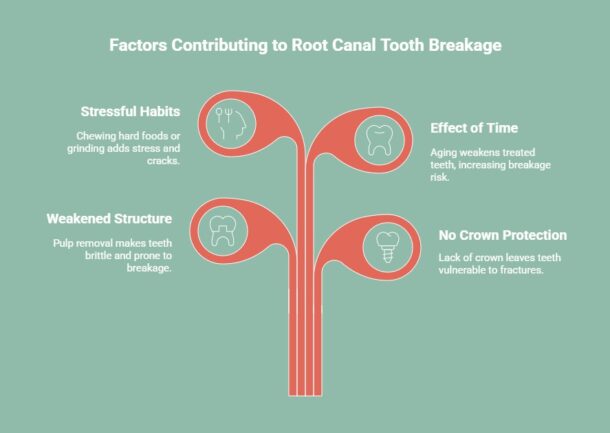
You might wonder why a tooth that has already been treated with a root canal can still break so easily. The truth is, while the procedure saves your tooth, it also changes it in ways that make it more fragile. Here are some reasons why this happens:
1. Weakened Structure
A root canal removes the infected pulp and blood vessels from the pulp chamber. This protects you from tooth pain and infection, but also means the tooth loses some of its natural strength, leaving it more brittle than before.
2. Missing Crown Protection
A dental crown acts like long-term protection for your tooth. Without it, root canal teeth are exposed to chewing forces and everyday wear. Skipping a crown is one of the common causes of fractures and missing teeth later.
3. Daily Habits That Add Stress
Crunching on hard foods such as ice, chewing sweet foods like hard candy bars, or grinding your teeth at night can put excessive pressure on tooth enamel. These habits increase wear and tear and cause further complications, such as cracks or a severe toothache.
4. The Effect Of Time
As we age, teeth naturally lose strength. Root canal–treated teeth are already vulnerable, and over time, they can become more brittle and prone to sudden fractures, especially front teeth, where appearance also plays a significant role.
A broken root canal tooth is not always your fault, but understanding the risk of further damage can help you take steps to protect it.
When Is a Broken Root Canal Tooth an Emergency?
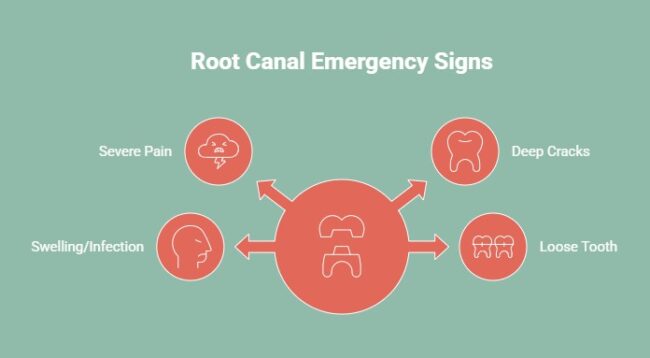
Not every broken root canal tooth requires an urgent visit, but certain warning signs mean you should seek immediate treatment and emergency dental care.
1. Severe Pain Or Sensitivity
A root canal tooth should not cause extreme pain. If you feel intense dental pain or tooth sensitivity to cold foods, it may mean the fracture has reopened the pulp chamber or allowed bacteria inside.
2. Visible Cracks Reaching The Root
A small chip in the crown may not be urgent, but a deep crack extending toward the root puts the entire tooth at risk. These breaks can worsen quickly if ignored.
3. Swelling Or Signs Of Infection
Redness, swelling, or pus near the gum line are signs of infection. Since infections can spread to other areas of the mouth or jaw, they require immediate dental attention.
4. Loose Or Unstable Tooth Structure
If the tooth feels wobbly or unstable, it indicates the supporting structure has been compromised. Without prompt care, tooth loss becomes highly likely.
If any of these issues occur, it is safest to treat them as a dental emergency and see your dentist as soon as possible. Quick action often makes the difference between saving and losing the tooth.
Quick action matters. Schedule a call with Dentist Tree for immediate dental emergency care.
What Happens If You Delay Treatment?
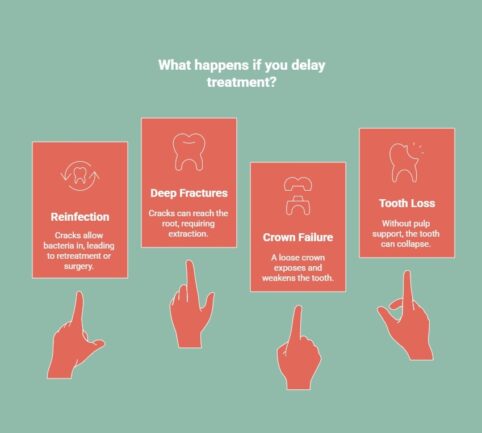
A broken root canal tooth is not like a regular cracked tooth. Because the inner pulp has already been removed, the tooth no longer has the same blood supply or natural strength to heal itself. This makes it much more vulnerable to complications if treatment is delayed.
Here’s a table that highlights what may happen if you postpone care:
• Reinfection of the root canal: A fracture can reopen pathways for bacteria, often requiring retreatment or even endodontic surgery.
• Fractures spreading below the gumline: Small cracks can extend into the root, leaving extraction as the only viable option.
• Failure of the dental crown: A loose or damaged crown exposes the underlying tooth, weakening it further and increasing the risk of breakage.
• Greater risk of total tooth loss: Without living pulp to absorb pressure, the tooth walls can eventually collapse, making preservation nearly impossible.
Unlike natural teeth, a root canal tooth cannot recover once it fractures. That’s why seeking prompt care is the only way to prevent losing the tooth entirely.
How Do Dentists Treat a Broken Root Canal Tooth?
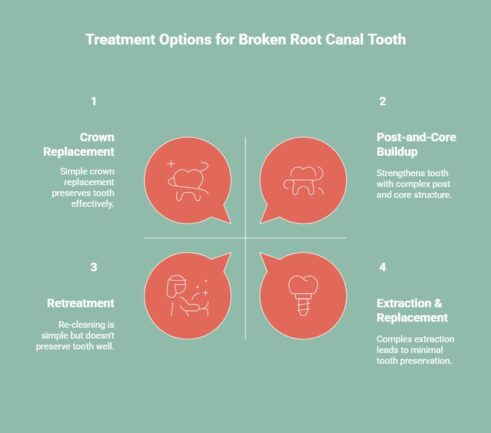
Treatment depends on how far the fracture extends and whether the tooth can still be restored. A broken root canal tooth often requires one of the following:
1. Crown Replacement
If the existing crown has fractured or loosened, the dentist will remove it, assess the tooth underneath, and place a new crown. This is usually possible if the break is limited to the upper part of the tooth.
2. Post-and-Core Buildup
When a large portion of the tooth is missing, a metal or fiber post is inserted into the treated canal. A core is built around it, and then a crown is placed. This gives the weakened tooth the strength to function again.
3. Root Canal Retreatment
If the fracture has reopened a pathway for bacteria, the old filling material is removed, the canal is disinfected, and a new filling is placed before restoring the tooth with a crown. This is done only if there is enough healthy structure left.
4. Extraction And Replacement
If the fracture runs vertically into the root or below the gumline, the tooth cannot be saved. Extraction is performed, and replacement options such as a dental implant or bridge are discussed to restore chewing function.
A broken root canal tooth cannot heal on its own. The sooner it is treated, the higher the chances of saving it with conservative options like a crown or post-and-core, rather than extraction.
A broken tooth needs prompt care. Book your appointment with Dentist Tree Houston now.
How Can You Prevent Root Canal Teeth From Breaking?
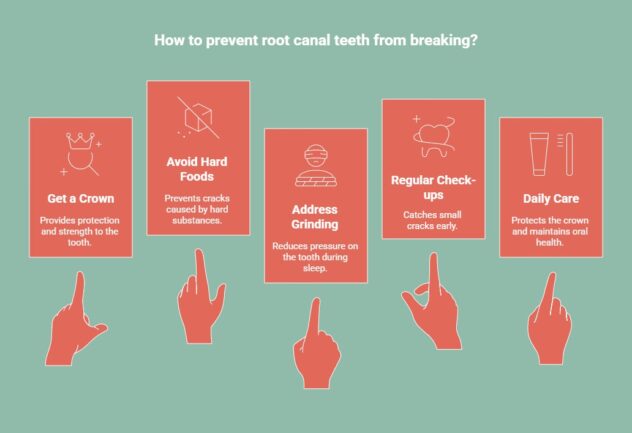
A tooth that has undergone root canal treatment requires ongoing protection. Simple preventive steps can make all the difference between maintaining a strong dental health for years and facing another dental emergency.
Here are some of the most effective ways to protect your root canal tooth:
1. Cover The Tooth With A Crown
After root canal therapy, placing a crown is essential. It restores strength, supports normal chewing, and prevents the treated tooth from fracturing under pressure.
2. Avoid Chewing On Hard Foods
Ice, nuts, hard candy, and popcorn kernels can place too much stress on a root canal tooth. Choosing softer foods and being mindful while eating helps protect against sudden cracks.
3. Address Teeth Grinding
Grinding or clenching creates a constant force on teeth, especially at night. Wearing a night guard reduces the pressure and lowers the risk of fractures.
4. Maintain Regular Check-ups
Routine dental visits allow your dentist to check the crown’s fit, detect small cracks early, and make sure the tooth remains stable and healthy.
5. Practice Good Daily Care
Brushing, flossing, and limiting sugary snacks help prevent decay around the crown and protect the tooth’s foundation.
These steps protect your treated tooth, extend the lifespan of your root canal treatment, and reduce the risk of future emergencies.
Also, if you’re wondering, “Is a chipped filling an emergency? Think of it like a chipped tooth. Minor chips can often wait, but deeper damage or pain necessitate seeking dental care promptly to prevent further complications.
Need Emergency Care for a Broken Root Canal Tooth? Trust Dentist Tree
A broken root canal tooth requires immediate attention to prevent infection, alleviate pain, and prevent potential tooth loss. At Dentist Tree, we focus on both emergency care and long-term restoration to ensure your oral health is protected.
Here’s what makes Dentist Tree the right choice:
- Specialized Emergency Dentistry – Quick, effective treatment for fractured and painful teeth.
- Advanced Restorative Options – Crown replacement, post-and-core buildup, retreatment, and implants tailored to your needs.
- Modern Technology – Precise diagnostics and treatments designed for comfort and efficiency.
- Flexible Care – Financing options and a patient-first approach to make treatment accessible.
- Trusted Local Team – Conveniently located in the Heights with experienced dentists ready to help.
If you need urgent care for a broken root canal tooth, don’t wait. Contact us today.
Conclusion
A broken root canal tooth may start as a small inconvenience, but it can quickly turn into a painful, costly issue if ignored. Acting early not only saves your tooth but also spares you the stress of dealing with infections or complex treatments later.
The smartest step you can take right now is to call your dentist at the first sign of trouble. Quick action puts you in control and keeps your smile safe for the future.
Frequently Asked Questions
Can I wait for my regular dental appointment if my root canal tooth breaks?
A broken root canal tooth needs urgent care to prevent infection and further damage. Even without pain, it’s vulnerable and should be treated by a dentist promptly.
What complications can arise from leaving a broken root canal tooth untreated?
Delaying care can cause reinfection, abscesses, severe pain, or infection spreading to the jawbone. This often leads to tooth loss and more complex, costly dental procedures.
Is it safe to use temporary remedies for a broken root canal tooth before seeing a dentist?
Temporary remedies like dental wax or pain relievers may ease discomfort, but they don’t solve the problem. Professional dental treatment is necessary to protect and restore the tooth fully.
Is it safe to wait for a regular dental appointment after chipping a tooth?
It depends on the chip. Minor chips without pain can usually wait, but larger breaks causing sharp edges, pain, or bleeding should be treated as a dental emergency.
What should I do right after chipping my tooth?
Rinse your mouth with warm water, apply a cold compress or ice pack to reduce swelling, and save any broken pieces. Avoid chewing on the affected area and see an emergency dentist promptly.
Is a chipped tooth an emergency?
A dental emergency chipped tooth situation occurs when the break causes pain, sharp edges, or swelling. Small chips may wait for regular care, but urgent cases need immediate dental attention.
Does a chipped tooth count as an emergency if I just had a root canal?
Yes. A chipped root canal tooth is more fragile and prone to further fractures or infection. In many cases, it requires prompt attention and emergency chipped tooth repair to protect the tooth from reinfection or loss.
Does CHIP cover emergency room visits?
Yes, CHIP (Children’s Health Insurance Program) does cover emergency room visits and other emergency services for children under 18, as it provides comprehensive health coverage, including inpatient and outpatient hospital care.
Is a small chipped tooth an emergency, and what should I do?
A small chipped tooth is usually not a dental emergency if there’s no pain or bleeding. Rinse your mouth with warm water, avoid chewing on the side, and book a dental visit to smooth or repair the chip.
The root canal tooth cracked in half. Am I in danger?
Yes, a root canal tooth cracked in half is a serious dental emergency. The fracture can expose the inner structure, invite infection, and often leave the tooth beyond saving. See your dentist immediately to prevent pain, infection, or tooth loss.