

Key Highlights
- A loose dental implant is a warning sign and should never be ignored.
- Common causes include crown or abutment issues, gum infection, failed bonding, or excessive force.
- Watch for pain, swelling, bleeding, crown movement, gum discoloration, or exposed implant threads.
- Seek immediate dental care if symptoms worsen or infection is suspected.
- Avoid chewing on the affected side, stick to soft foods, and maintain gentle oral hygiene until your visit.
- Dentists can tighten components, treat infections, or perform implant removal and replacement in severe cases.
- Dentist Tree provides expert, fast, and comprehensive care for loose or damaged implants.
Imagine biting into your favorite meal and suddenly feeling your dental implant shift. That small movement is enough to make anyone pause and wonder if something serious is happening.
Implants are designed to feel just like natural teeth, providing stability, security, and dependability. So when an implant starts to loosen, it’s a sign that something isn’t right. While it doesn’t always mean a dental emergency, it’s an issue you should never ignore.
In this guide, you’ll learn the common reasons implants can loosen, when to seek urgent care, and the steps you can take to protect your implant, your smile, and your overall oral health.
What Makes a Dental Implant Loose?
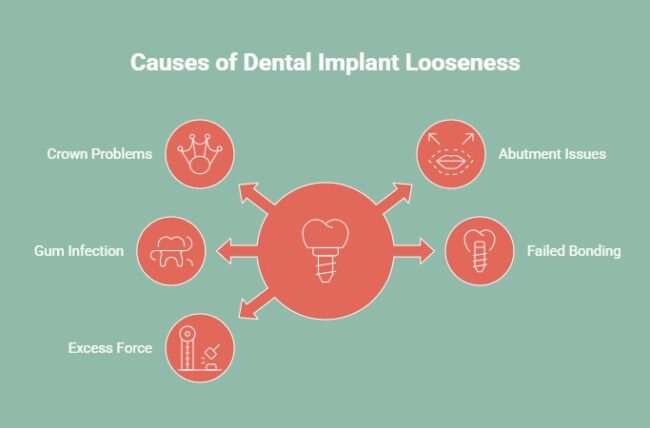
Dental implants should stay firmly anchored in your jaw. If one feels loose, it means something has disrupted that secure connection. Common reasons include:
- Crown Problems: The artificial tooth on top of the implant can loosen if the cement or screw holding it in place wears down.
- Abutment Issues: The small connector between the crown and implant post may shift, creating movement you can feel.
- Gum Infection: Conditions like peri-implantitis damage the surrounding gums and bone, weakening support for the implant.
- Failed Bonding: Sometimes, the implant post fails to fuse properly with the jawbone, leaving it unstable from the start.
- Excess Force: Teeth grinding, chewing tough foods, or direct trauma can strain the implant and loosen its hold.
No matter the cause, a dental implant that moves is not typical. Early treatment is the key to saving both the implant and your oral health.
How to Recognize a Loose Dental Implant?
The most obvious sign of trouble is movement when you touch the implant with your tongue or finger. Even without pain, looseness is never regular and can lead to serious complications if ignored.
Here are the key symptoms to watch for:
Subtle Clues Something’s Not Right:
• Persistent pain or discomfort around the implant
• Swelling or redness in the gums
• Bleeding when brushing or flossing
• A crown that feels slightly wobbly or shifts when touched
• Gum discoloration around the implant area
• Pain or difficulty when chewing
These early hints suggest that your implant, surrounding gums, or bone may be under stress. Addressing them quickly can help prevent further damage.
Serious Red Flags That Need Immediate Attention:
• Pus or fluid oozing from the implant site
• Fever or other signs of infection
• Gums pulling away or receding from the implant
• Visible metal threads or exposed bone
At this stage, infection or bone loss could be compromising your implant’s stability. Seeking prompt dental care is essential to save the implant and protect your overall oral health.
Even mild symptoms should never be ignored as early action can make all the difference in preserving your smile.
When Should You Seek Immediate Care?
Not every loose implant means a midnight trip to the dentist, but certain warning signs should never be ignored. If you notice these symptoms, call your dentist right away:
- Persistent or severe pain around the implant
- Swelling that keeps getting worse
- Pus or bleeding that doesn’t stop
- Fever or other signs of infection
- Gum recession or exposed implant threads
These are red flags that the supporting bone or gums may be compromised. Quick action can make the difference between saving your implant and losing it altogether.
Experiencing implant issues? Contact Dentist Tree today for expert care!
What Should You Do (and Avoid) Until Your Dentist Visit?
Once you notice your implant is loose, your first step should be to schedule a dental appointment. While you wait, taking the right precautions can prevent further damage and improve the chances of saving your implant.
Smart Moves to Take Immediately
- Do call your dental office right away to explain the situation.
- Do avoid chewing on the side with the loose implant.
- Do stick to soft foods and avoid anything hard, crunchy, or sticky.
- Do keep up with oral hygiene, but brush and floss gently around the area.
- Do rinse with a warm saltwater solution to help keep the site clean.
Actions That Can Harm Your Implant
- Don’t try to wiggle, tighten, or fix the implant yourself.
- Don’t ignore the problem, hoping it will resolve on its own.
By following these simple ‘dos’ and ‘don’ts,’ you’ll protect your implant and give your dentist the best chance to restore stability.
How Can Your Dentist Fix a Wobbly Implant?
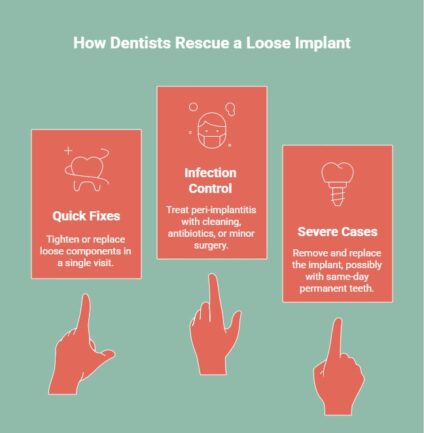
Before diving into treatment options, it’s essential to understand that the approach depends entirely on the cause of your implant’s looseness.
A careful exam, often including X-rays, helps your dentist determine the best solution. The good news is that most wobbly implants don’t need full replacement. Many problems can be corrected quickly if caught early.
Let’s examine how dentists address various causes.
1. Quick Fixes for Minor Problems
Often, the implant post is stable, and the issue is with the attached components. A loose abutment, the connector, can usually be tightened or replaced, while a loose crown can often be cleaned and re-cemented.
These fixes are straightforward and typically completed in a single visit.
2. Fighting Infection to Protect Your Implant
If infection, called peri-implantitis, is causing looseness, the dentist focuses on stopping bacteria and saving the surrounding tissue. This may involve deep cleaning below the gumline, antibiotics, or minor gum surgery to help the tissue heal and reattach.
Acting early prevents bone loss and preserves the implant, avoiding a dental implant break emergency.
3. Rebuilding the Foundation for Severe Cases
In severe situations, looseness may indicate bone loss or implant failure. The dentist may need to perform an emergency dental implant removal, allow the area to heal, and place a new implant.
In some cases, patients can benefit from emergency dental implants for quick relief, restoring function and appearance efficiently.
No matter the cause, early evaluation is key. The sooner you see your dentist, the better the chance of saving your implant and protecting your smile.
Early action matters. Schedule your implant check with Dentist Tree immediately.
What Habits Protect Your Dental Implant from Loosening?
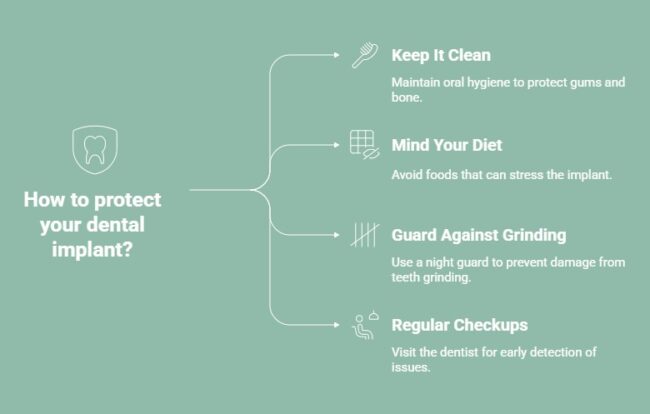
After addressing a loose implant, maintaining its stability is key. Here’s what you can do to protect it and keep your smile strong.
1. Maintain Excellent Oral Hygiene
Brush at least twice a day and floss gently around your implant. Consider using an alcohol-free antibacterial mouthwash to reduce plaque buildup. Keeping the surrounding gums and bone healthy is the most important step in preventing looseness.
2. Avoid Hard, Sticky, or Crunchy Foods
Chewing on very hard foods or sticky candies can place unnecessary stress on your implant. Stick to softer foods when possible, especially if you notice any mild discomfort during chewing.
3. Protect Against Teeth Grinding
If you grind or clench your teeth, consider consulting your dentist about a night guard. Grinding can put excessive pressure on your implant, increasing the risk of loosening or damage over time.
4. Attend Regular Dental Checkups
Routine checkups and professional cleanings help your dentist monitor the health of your implant and surrounding tissues. Early detection of any issues ensures quick treatment before problems escalate.
With these habits in place, your implant stays secure, your gums stay healthy, and your smile is ready for every bite and every laugh.
Looking for Expert Care for a Loose Implant? Dentist Tree Has You Covered
A loose implant can be stressful and confusing. You might wonder what to do next or who to trust with your smile. At Dentist Tree of the Heights, we provide fast, expert care to stabilize your implant and protect your oral health.
We offer comprehensive services to address both emergencies and long-term dental needs, so your smile is always in safe hands.
How Dentist Tree Can Help:
- Emergency Dental Care – Immediate treatment for pain, broken teeth, or gum problems
- Dental Implants – Replace missing teeth completely, root and all, for a natural smile
- Cosmetic Dentistry – Brighten, straighten, and perfect your smile with personalized treatments
- Oral Surgery – From extractions to complex procedures, performed with care and comfort
- Orthodontics – Braces or Invisalign to correct bite and alignment issues
With modern technology, gentle techniques, and a friendly, experienced team, Dentist Tree ensures every visit is smooth and stress-free. Flexible financing and convenient scheduling make caring for your smile easy and accessible.
Don’t wait for a loose implant to get worse. Reach out online to schedule your appointment.
Final Words
A loose implant does not have to mean losing your smile. But it does mean acting quickly and choosing the right dental team. Think of it as a second chance to protect both your health and your confidence.
Do not wait until discomfort becomes a more serious issue. If you have noticed movement, pain, or any changes around your implant, reach out for help now. The sooner you act, the easier it is to fix and the better your long-term results will be.
Your smile is one of your greatest assets. Keep it strong, stable, and radiant by making your dental health a priority today.
Frequently Asked Questions
Is a dental implant falling out an emergency?
Yes, a dental implant falling out is a dental emergency. You should contact a dentist immediately for evaluation, repair, or emergency dental implant repair. Quick action can prevent infection, bone loss, or further complications.
What should I do right away if my dental implant is loose?
If you have a loose dental implant, take immediate action by calling your dentist to schedule an appointment. Avoid chewing on it and stick to soft foods. Do not try to fix it yourself. This is a potential dental emergency, and prompt professional dental care is essential to prevent further damage.
Can a loose dental implant always be saved, or does it need replacement?
Whether a loose dental restoration can be saved depends on the cause. If it’s a loose crown or abutment, the fix is often simple. However, if the implant placement itself has failed due to bone loss, a replacement may be necessary. Your dentist will determine the appropriate treatment plan after a thorough examination.
How can I prevent my dental implants from becoming loose again?
Prevention is key. Maintain good oral hygiene by brushing and flossing daily, and attend regular dental care appointments. This helps preserve your oral health and the bone density around the implant. Also, avoid habits like chewing ice or grinding your teeth to protect your implants from excessive force.
Is dental implant failure considered a medical emergency?
No, dental implant failure is not usually considered a medical emergency, but it is a dental emergency. Prompt attention is important to prevent further damage, infection, or bone loss, and to increase the chances of saving or replacing the implant.
Can a loose dental implant get infected?
Yes, a loose dental implant can allow bacteria to enter the surrounding gums and bone, potentially leading to infection. Prompt evaluation by a dentist is important to prevent further complications or implant failure.
What is the 3/2 rule for dental implants?
The 3/2 rule refers to maintaining at least 3 mm of bone around an implant and spacing implants 2 mm apart. This ensures proper support, stability, and a natural contour for the implant crown.
How to search for emergency dental implants near me?
If you need urgent care, search online for “emergency dental implants near me” along with your city or zip code. Look for a dental office that offers same-day evaluations, quick repair, or replacement options, and check reviews for reliability and patient satisfaction.
What is an emergence profile dental implant?
An emergence profile dental implant refers to how the implant crown or prosthetic emerges from the gums, creating a natural-looking contour that blends with your surrounding teeth. Proper planning ensures both aesthetics and long-term implant stability.
Can you get permanent teeth quickly with emergency dental implants?
Yes, in certain urgent cases, patients may qualify for emergency dental implants to get permanent teeth in a day, allowing damaged or missing teeth to be replaced quickly while restoring function and appearance in a single visit.